-full-color-rgb-2000px-w-72ppi.webp)
When a shower suddenly feels scalding, or the kitchen tap runs steaming hot, it is more than a small inconvenience. Consistently overheated water can damage fixtures, drive up energy bills and create a serious safety risk for children, older family members and anyone with sensitive skin. Hop To It Plumbing is called to homes across Brisbane where the hot water is set too high or where a hidden fault has turned a reliable system into a daily hazard. Understanding why this happens is the first step to restoring comfort, protecting your household and avoiding preventable repairs.
In this article, we explain the most common reasons hot water runs too hot, how modern systems are designed to keep temperatures within a safe range and what warning signs may point to a problem inside the heater or its valves. You will learn how thermostat settings affect water temperature, how tempering and mixing valves are meant to work and why inconsistent or suddenly hotter water can point to a failing component. Homeowners will also get a clearer idea of when a simple adjustment may help, when professional testing is needed and when to call an emergency plumber in Brisbane.
What Is the Safe Hot Water Temperature in Australia?
In Australia, there are clear guidelines that set out what is considered a safe hot water temperature. These temperatures are designed to balance two important needs: reducing the risk of scalding at taps and showers while still keeping stored water hot enough to limit bacterial growth. For homeowners, the key point is that the safe temperature at the outlet is different from the storage temperature inside the hot water system. Understanding that difference helps explain why a system can store very hot water while still delivering safer water at the tap.
Recommended Tap Temperatures in Australian Homes
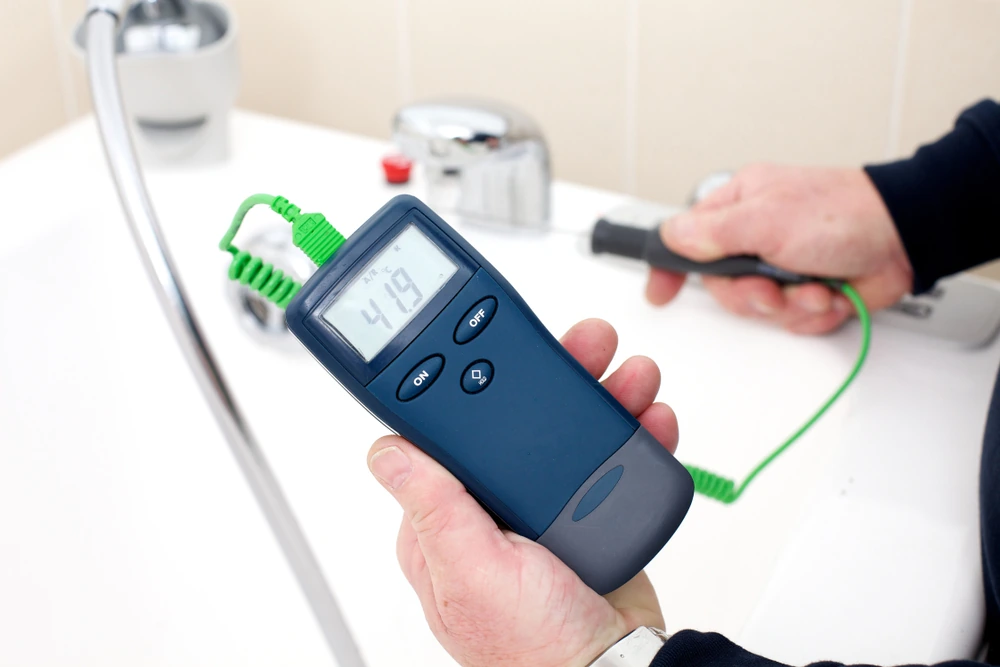
For most household taps and showers, the generally accepted safe delivery temperature is about 50°C. At this temperature, healthy adults can usually use hot water comfortably without immediate scalding, although very young children and older people can still be more sensitive.
In homes or facilities used by vulnerable people, stricter limits often apply:
- bathroom outlets in places such as childcare centres, nursing homes and similar facilities are generally limited to 45°C
- many new or renovated homes use tempering devices that limit bathroom hot water to around 50°C as standard
These limits focus on bathrooms and showers because that is where people are most exposed to hot water for longer periods. Kitchen and laundry taps may sometimes be allowed to run slightly hotter, as people generally use and mix water more carefully at those outlets.
Required Storage Temperature Inside the Heater
While outlet temperatures should be around 50°C, hot water in most storage systems generally needs to be stored at a minimum of 60°C. This higher storage temperature helps control the growth of Legionella bacteria, which can multiply in water that is warm but not hot enough.
That is why modern systems are designed to separate storage temperature from delivery temperature. In most homes, this is managed by either:
- a tempering valve that mixes hot and cold water to deliver water at about 50°C to bathroom outlets
- a thermostatic mixing valve in some higher-risk buildings where more precise temperature control is required
Lowering the cylinder thermostat below 60°C is not the right way to make tap water safer. The better approach is to keep storage temperatures high enough for hygiene and use the correct tempering or mixing device to control the water temperature at the outlet.
The Most Common Causes of Overly Hot Water
When hot water suddenly feels scalding, it is usually a sign that something in or around the water heater is not set correctly or is starting to fail. Understanding the most common causes helps homeowners work out whether a simple adjustment may fix the problem or whether a proper inspection is needed. In most homes, the issue comes down to incorrect temperature settings, a faulty internal part or a problem with how hot and cold water are mixing at the tap. Each cause has its own warning signs, and some can create a real safety risk, especially for children or older adults.
Thermostat Set Too High or Not Calibrated Properly
One of the first things to check is the thermostat setting on the water heater. Many systems are set too high from the start or have been turned up over time in an attempt to get more hot water. For safety and comfort, the water delivered at outlets such as taps and showers should generally be around 50°C. Anything much higher can cause scalding in seconds, especially where there is no effective tempering or mixing device in place.
On gas water heaters, the dial might show “Hot”, “A B C” or numbers instead of clear temperatures. Electric heaters usually have thermostats behind a small access panel on the side of the tank. If the setting is too high, the heater will continue heating until it reaches that level.
Thermostats can also lose calibration over time. The dial may appear to be set safely while the actual water temperature is much hotter than expected. This often shows up as water that feels far hotter than it should or seems to fluctuate for no obvious reason. In that case, the thermostat may need to be tested and replaced rather than simply adjusted.
Failing Thermostat or Heating Element
Sometimes the thermostat fails completely and does not shut the heater off when it should. On an electric water heater, this can cause the upper or lower heating element to keep running, which superheats the water. Signs can include very hot water followed by quick temperature changes, popping or sizzling noises from the tank, or the safety reset button tripping repeatedly.
Gas water heaters can have similar problems if the gas control valve or sensor fails and allows the burner to run for too long. Any signs of overheating combined with unusual smells, noises or abnormal burner behaviour are a strong indication that the unit should be inspected. Persistent overheating can damage the tank and shorten the life of the system.
Mixing Valve or Tap Problems
Not every hot water problem starts at the water heater. Many modern plumbing systems include a tempering or mixing valve that blends hot and cold water to a safer delivery temperature. If this valve fails, seizes up or is set incorrectly, the water arriving at taps and showers can be far hotter than expected, even if the heater itself is operating at the correct temperature.
Individual taps and shower mixers can also be responsible. A worn cartridge or faulty single-lever mixer may stop blending in enough cold water, leaving water that feels scalding no matter how the handle is adjusted. If only one bathroom or fixture has water that is too hot while others feel normal, that usually points to a local fixture or mixing problem rather than a fault with the heater itself.
How to Tell If It’s a Tempering Valve Problem
If hot water is suddenly much hotter than usual at the taps, the tempering valve is one of the first things to suspect. This device is designed to blend hot water from the cylinder with cold water so it comes out at a safe, consistent temperature at taps and showers.
When a tempering valve starts to fail or is set incorrectly, it often shows up as water that is scalding, fluctuating or noticeably different from one outlet to another. Knowing the typical signs can help a homeowner work out whether the valve may need to be inspected or replaced.
Typical Symptoms of a Faulty Tempering Valve
A faulty tempering valve usually affects the mixed water temperature rather than the storage temperature inside the hot water cylinder. Common warning signs include:
- hot water suddenly becoming scalding even though the cylinder thermostat has not been adjusted
- showers starting warm, then quickly turning very hot
- water being too hot at some taps but closer to normal at others
A tempering valve problem can also show up as inconsistent temperatures from one use to the next. For example, one shower may feel normal in the morning, then become dangerously hot that evening with no change to the controls. That kind of unpredictable behaviour often points to internal wear or sticking parts inside the valve.
Simple Checks a Homeowner Can Safely Do
There are a few basic checks that can help narrow down whether the tempering valve is the likely cause before the system is inspected.
First, check whether the hot water is excessively hot at all fixtures that receive tempered water, such as bathroom taps and showers. If every tempered outlet is too hot, the valve may no longer be blending in enough cold water or may be bypassing internally.
Next, compare a tempered outlet with a laundry tub or another tap that may be connected to untempered hot water, if the property is set up that way. If both are running unusually hot, the tempering valve may not be doing its job properly.
It is also worth looking for visible signs near the valve itself, such as leaks, green or white crust around fittings, or a valve body that feels unusually hot when approached carefully. The valve is usually located near the hot water system where the hot and cold lines meet. A leaking or noisy valve often points to internal failure.
When It Is Unlikely To Be the Tempering Valve
If there is no hot water at all, or the water is only lukewarm everywhere, the problem is more likely with the hot water system, thermostat or heating element rather than the tempering valve. Similarly, if both hot and cold pressures are very low, the issue may lie with the main supply or a pressure-limiting valve.
If the water temperature is wrong at only one tap while the others are normal, the cause may be a faulty mixer tap, a blocked aerator or a local plumbing issue rather than the tempering valve. In that situation, the affected fixture would usually be checked first before any decision is made about adjusting or replacing the tempering valve.
Immediate Safety Checks You Can Do
If the hot water suddenly feels scalding, it is important to act quickly before anyone gets burned. There are a few simple checks a homeowner can do right away to reduce the risk and help work out whether the problem is urgent enough to need immediate attention. It is best to start with basic checks that do not require tools or technical knowledge. These steps are especially important where children, older family members or anyone with sensitive skin could be exposed to very hot water.
Turn Down The Heat At The Source
If the water is coming out dangerously hot, the first step is to reduce the temperature safely.
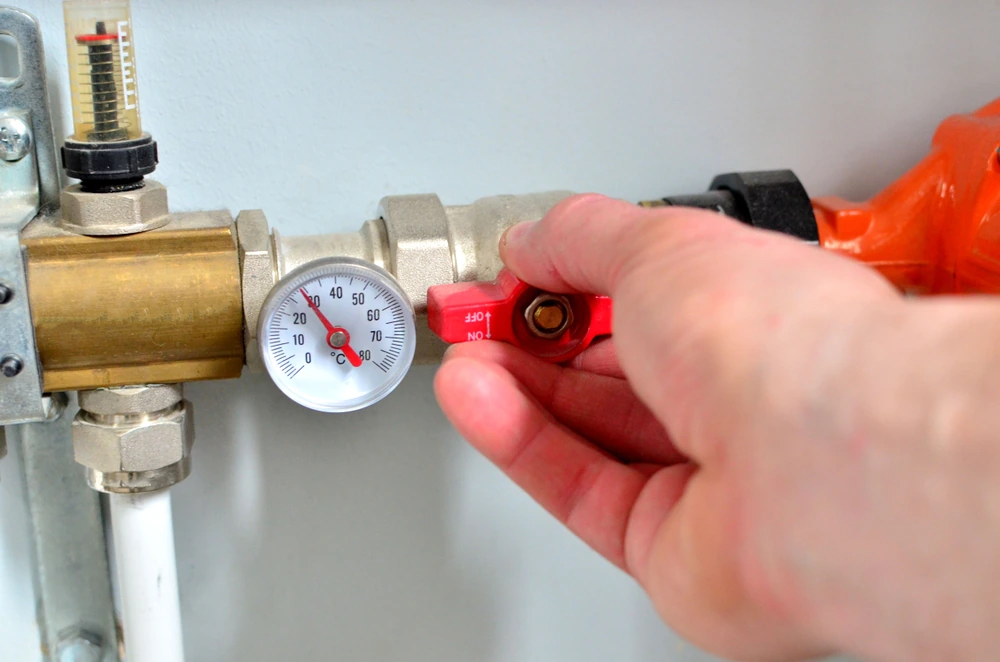
For a standard storage hot water system, look for the thermostat dial on the front or side of the tank. It is often behind a small metal or plastic cover. If it has numbers rather than temperatures, turning it to a middle setting will often bring the water closer to a safer range. If it shows temperatures, aim for about 50°C at the outlet. The cylinder itself should still remain hot enough for safe storage, so outlet temperatures are better controlled through the correct tempering or mixing device rather than by turning the whole system down too far.
For a gas storage unit, the temperature control is usually near the gas control knob. Turn the temperature down one step, then wait at least an hour and test the hot tap again. If the water still comes out extremely hot after that, there may be a fault with the thermostat or gas control valve, and the unit should be checked by a licensed plumber or gasfitter.
For an electric system, turn off the power at the switchboard if the water is dangerously hot or close to boiling. This stops the element from continuing to heat if the thermostat has failed. The water will stay hot for some time, but it will gradually cool instead of getting hotter.
For continuous flow or instantaneous units, use the digital control pad if there is one. Many allow the user to set a maximum outlet temperature. Set it to 50°C or lower for bathrooms. If the unit ignores the setting or the temperature fluctuates widely, the internal controls may not be working properly.
Make Taps and Showers Safer Immediately
While the system cools or until a plumber can inspect it, it is important to reduce the risk at the fixtures. Run the hot tap for a few seconds and briefly test it with the back of the hand rather than the fingertips. If it is too hot to keep in contact with even for a second, label that tap as “hot” and warn everyone in the home not to use it without adding plenty of cold water.
In showers, turn the mixer handle to a position that gives a comfortable warm temperature, then mark that position with tape so family members know where to set it. Young children should be closely supervised during baths and showers until the issue is fixed. Filling baths with cold water first, then adding hot water, gives more control and reduces the risk of splash burns from very hot water.
If any tap produces steam or spits boiling water, stop using it until the system has been checked.
Check for Signs of a Serious Fault
Water that is excessively hot can sometimes point to a more serious failure inside the heater.
Stand back slightly from the cylinder and listen for rumbling, banging or hissing sounds. Look for water discharging continuously from the temperature-pressure relief valve pipe. A gentle drip while the system is heating can be normal, but a steady flow or heavy discharge is not.
Carefully assess the outside of the tank without touching exposed metal fittings. It should feel warm, not dangerously hot. If there are signs of bulging, scorching, burning smells, or if the relief valve is spraying or discharging heavily, turn off the power or gas at the main isolation point and shut off the cold water supply to the heater if it is safe to do so.
When to Call a Licensed Plumber
Hot water that is consistently too hot is more than an annoyance. It can create a serious safety risk and may point to deeper problems within the water heater or plumbing system. While some basic thermostat adjustments are safe for a homeowner to try, there are clear situations where the issue should be assessed by a licensed plumber. Knowing when to stop troubleshooting can help prevent scald injuries, water damage and gas or electrical hazards. The situations below are some of the clearest signs that the problem goes beyond a simple adjustment.
The Water is Scalding Even After You Lower the Thermostat
If the water remains dangerously hot after the thermostat has been turned down, the system is not responding properly. This can point to a failed thermostat, a stuck gas control valve or a faulty heating element that continues running when it should shut off.
When these components fail, the tank can overheat and create a serious burn risk at taps and showers. A licensed plumber can test the thermostat and safety controls, replace faulty components and confirm that the system is cycling off at a safe temperature. Homeowners should not attempt to open gas valves or electrical compartments themselves.
Signs of Electrical or Gas Problems
Very hot water combined with other warning signs can indicate a gas or electrical fault rather than a simple temperature setting issue. A licensed plumber should be called promptly if any of the following occur alongside overheating:
- a faint or strong gas smell near the heater
- the burner cycling on and off rapidly
- tripped breakers or fuses when the heater runs
- sizzling or crackling noises from an electric heater panel
Gas control valves and ignition systems need to be handled carefully to avoid leaks or carbon monoxide risks. Electric heaters also contain high-voltage components at the elements and controls. A licensed plumber can identify the source of the fault and make sure the system is operating safely again.
Water that is consistently too hot is more than a daily annoyance. It can create a real scalding risk, place extra strain on your hot water system and point to an underlying fault that should not be ignored. As this article has explained, the cause may be something relatively straightforward, such as an incorrect setting, or it may involve a failing thermostat, tempering valve or another component within the system. The key point is that overly hot water should always be taken seriously. Identifying the cause early can help protect your household, prevent damage to the system and restore safer, more reliable hot water throughout the home.