
Replacing separate hot and cold taps with a single mixer can make your kitchen sink or bathroom basin more convenient to use. But keeping the existing fixture depends on more than finding a tap you like. A mixer needs a suitable mounting position, compatible connections and enough room to operate properly.
If you are updating a Brisbane kitchen or bathroom without replacing the whole sink or basin, it helps to understand the constraints before shopping. You will learn how existing tap holes affect your options, what can happen to unused openings and why spout reach matters as much as appearance. You will also know what to ask a licensed plumber before committing to a purchase.
Will a Mixer Fit the Holes in My Existing Sink or Basin?
A mixer is not automatically a direct replacement for separate taps. Your existing arrangement determines where a new tap could sit, whether the mounting hole is suitable and how the hot and cold supplies can connect beneath it.
Converting separate taps to mixer operation may be possible while retaining the fixture, but the visible layout is only part of the assessment. A licensed plumber also needs to consider the mounting surface, available space underneath and the requirements of the proposed tap.
One-Hole and Three-Hole Layouts Need Different Solutions
A typical single-hole mixer combines the handle and spout in one body, with both supplies connecting below the mounting surface. Separate tap sets often use three openings: one for the hot tap, one for the cold tap and one for the spout. Some basins instead have two individual taps, each with its own outlet.
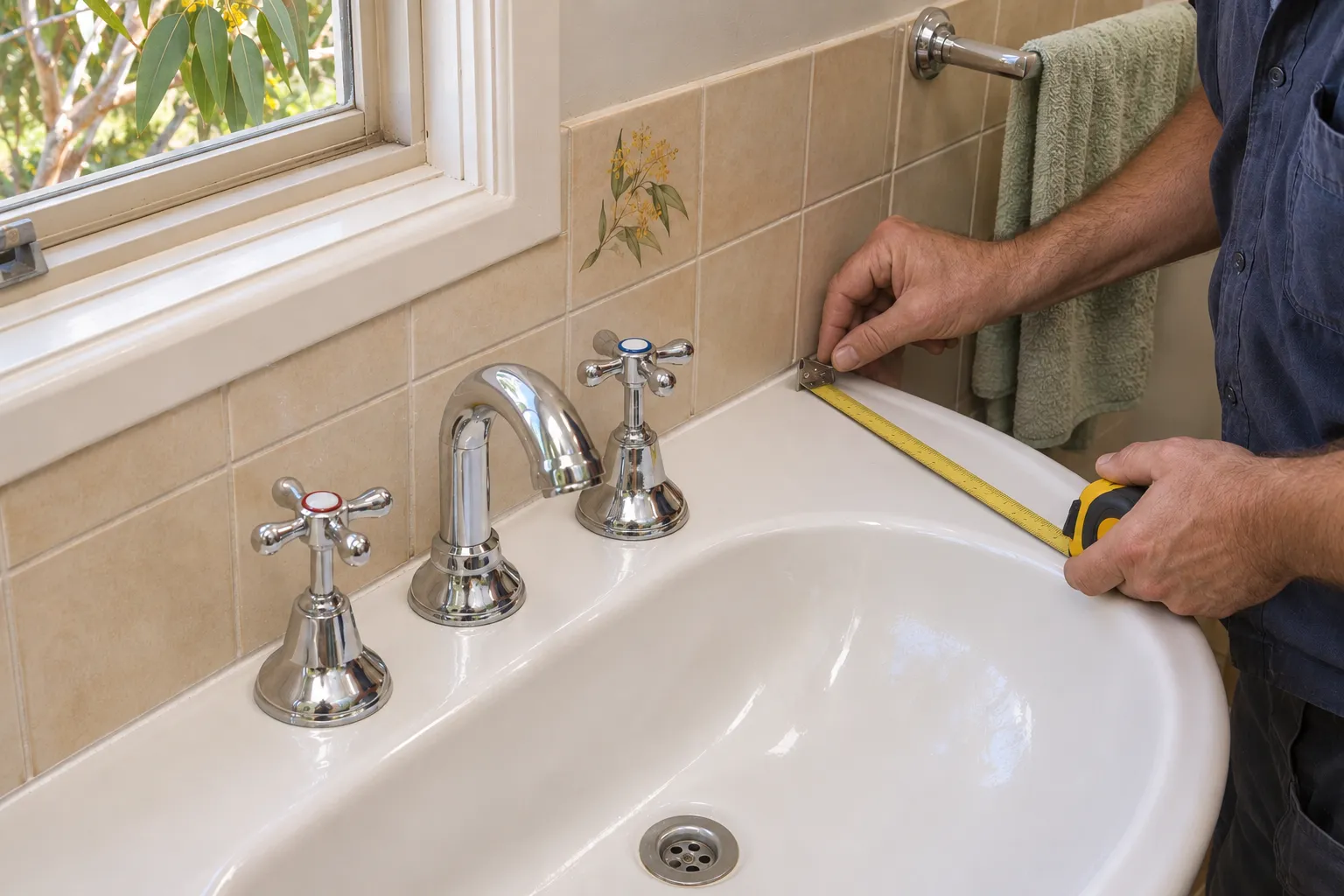
With a three-hole arrangement, it is tempting to assume that the mixer can simply occupy the centre opening. That opening may be a candidate, but its diameter, position and surrounding surface still need checking. The original spout fitting and the replacement mixer may have different mounting requirements, even if they appear similar from above.
The underside matters too. A mounting hole can look suitable while the space below is obstructed by the basin bowl, cabinet framing or existing pipework. A mixer needs room for its fixing assembly and supply connections. A narrow ledge behind a basin may offer much less usable space than its appearance suggests.
If your fixture already has a single mounting hole, that removes the question of unused openings but does not establish compatibility on its own. The proposed tap must still suit the hole dimensions, surface thickness and available clearances. Product specifications are more useful here than a photograph of the tap in a showroom setting.
Wall-Mounted Taps Introduce a Different Set of Constraints
Separate taps mounted through a wall are a different proposition from taps mounted on a sink or basin. Their controls and outlet connect to plumbing within the wall, so a deck-mounted mixer is not a direct substitute. A wall-mounted mixer may also require a different concealed connection arrangement from the existing tap set.
That can change the scope from a fixture-level replacement to work involving wall access and finishes. Before buying, ask whether the proposed change can retain the existing connection positions or would require concealed plumbing alterations. Photos can help a plumber identify the likely arrangement, but they cannot confirm everything behind the finished wall.
Unused Tap Holes Need a Suitable Finish
If one mixer replaces a three-piece tap set, the remaining openings need to be addressed as part of the job. Leaving them unresolved affects both the appearance of the fixture and its suitability for everyday use around splashing water.
There is no universal finishing solution. The size and spacing of the openings, the shape of the mounting surface and the fixture material all influence whether a neat adaptation is practical.
Cover Plates or Blanking Fittings May Suit Some Fixtures
A suitable cover plate may conceal redundant holes beneath or around the new mixer. Alternatively, individual blanking fittings may finish the unused openings. These options depend on the dimensions of the existing holes and whether suitable fittings can sit securely on the surrounding surface.
A plate needs more than enough length to span the openings. Its width, profile and compatibility with the mixer also matter. A raised rim, curved basin ledge or uneven surface can prevent a seemingly suitable plate from sitting correctly. Not every mixer is designed to accommodate a cover plate, so the two should be assessed together.
Individual blanking fittings create a different visual result. Rather than disguising the original arrangement entirely, they leave visible caps where the old taps were positioned. That may be acceptable if retaining the fixture is your priority. It is worth asking what the finished surface will look like before approving the tap selection.
The finish also deserves attention. A shiny new mixer beside older fittings or a differently coloured plate may look more noticeable than expected. Ask whether the proposed components are available in a compatible finish and whether their shape will leave awkward edges or tight areas to clean around. A functional solution is not necessarily an invisible one.
Fixture Material Limits What Can Be Altered
Ceramic basins need particular care because their existing openings and glazed surfaces constrain what can reasonably be changed. You should not assume that an extra hole can be added or an existing one enlarged without risking damage. Any proposed alteration needs professional assessment rather than being treated as a routine part of replacement.
Metal sinks present different considerations. The mounting area must support the tap securely, particularly where the mixer is tall or frequently moved during use. A plumber may need to assess the rigidity of the sink deck and whether the proposed mounting arrangement is suitable for that surface.
Where taps pass through a benchtop rather than the fixture itself, the benchtop material and thickness become part of the assessment. Existing holes may remain visible beyond the footprint of the new tap, while access below can be restricted. Ask your supplier to distinguish between retaining the sink or basin and retaining every surrounding surface unchanged, because those are not always the same outcome.
How Do I Choose a Mixer That Works With My Basin?
Good basin mixer compatibility is about how the tap works with the bowl, not just whether it can be attached. The outlet position, spout height and handle movement determine whether the replacement is comfortable to use in the space you already have.
For a kitchen tap replacement, the same principle applies, with added attention to filling cookware and reaching the usable parts of the sink. A taller or more expensive mixer is not automatically a better match.
Compare tap flow rates and water efficiency ratings when shortlisting mixers, considering everyday tasks such as washing your hands or filling cookware.
Spout Reach Should Suit the Bowl Rather Than Just the Room
Spout reach describes how far the outlet projects from the tap body. If it is too short for your basin, the water may land close to the rear edge and leave little space for your hands. If it projects too far, the stream may land uncomfortably close to the front of a small bowl.
The bowl's shape also affects the result. A shallow basin, a steeply curved back and a broad flat base will not handle water in exactly the same way. Outlet angle and water flow influence splashing too, so there is no single ideal spout height that works for every fixture.
Think about the tasks you perform rather than choosing by overall tap height alone. At a bathroom basin, you need comfortable handwashing space without constantly touching the bowl or spout. At a kitchen sink, you may need room for larger items while still being able to direct water into the bowl conveniently.
A swivel spout can offer useful flexibility at a kitchen sink, but its movement should suit the actual bowl layout. Ask whether it can reach the areas you use without regularly swinging beyond the sink edge. Hop To It Plumbing's kitchen plumbing service is relevant if you want the existing sink and proposed replacement assessed together.
Handle Movement Needs Clearance From Walls and Splashbacks
A mixer can fit through the mounting hole yet remain awkward to operate. Some handles move backwards as well as sideways or upwards. If the tap sits close to a wall or splashback, that movement may be restricted before the handle reaches its full operating range.
Check the manufacturer's clearance requirements against the intended position. Also consider whether you can reach the handle comfortably without leaning across the bowl. A side-mounted handle may suit one arrangement but be inconvenient in another, particularly where the tap sits beside a deep basin or close to surrounding fittings.
Usability includes the rest of the sink area. A new handle or spout should not interfere with nearby items or make the mounting surface difficult to clean. If the replacement is also intended to address dripping, poor flow or another existing fault, describe that separately. These common kitchen plumbing issues can help you recognise symptoms to raise during the assessment rather than assuming a new tap will resolve every problem.
Confirm Compatibility Before Buying the New Tap
The safest time to confirm compatibility is before you purchase the replacement, especially if keeping your current sink or basin is non-negotiable. A tap that looks suitable online may still require mounting or connection changes that do not suit the existing fixture.
An initial discussion can narrow the options, while an on-site assessment may be needed to establish the installation requirements. Ask a licensed plumber to assess the proposed product rather than relying on a general assurance that mixers usually fit.
Photos and Fixture Details Help the Initial Discussion
Start with clear photos showing the whole sink or basin, the existing tap arrangement and the surrounding wall or splashback. Where it is safely visible without moving or dismantling anything, a photo of the space beneath the fixture can also help explain access limitations.
Include any known fixture details, such as its material and whether the taps pass through the fixture, a benchtop or the wall. If you have shortlisted a mixer, provide its product specification sheet. The mounting dimensions and clearance requirements are more informative than a product name or a decorative image alone.
Be clear about what you want to retain. Keeping the basin, avoiding visible cover fittings and leaving the benchtop untouched are separate preferences that may not all be achievable together. Explaining your priorities allows the plumber to identify which options are realistic before you spend money on a tap.
If you are comparing a plumber Brisbane homeowners can engage for this assessment, ask what information is needed before a recommendation can be made. A useful response should identify the checks required and any uncertainties, rather than promise compatibility from a single photo.
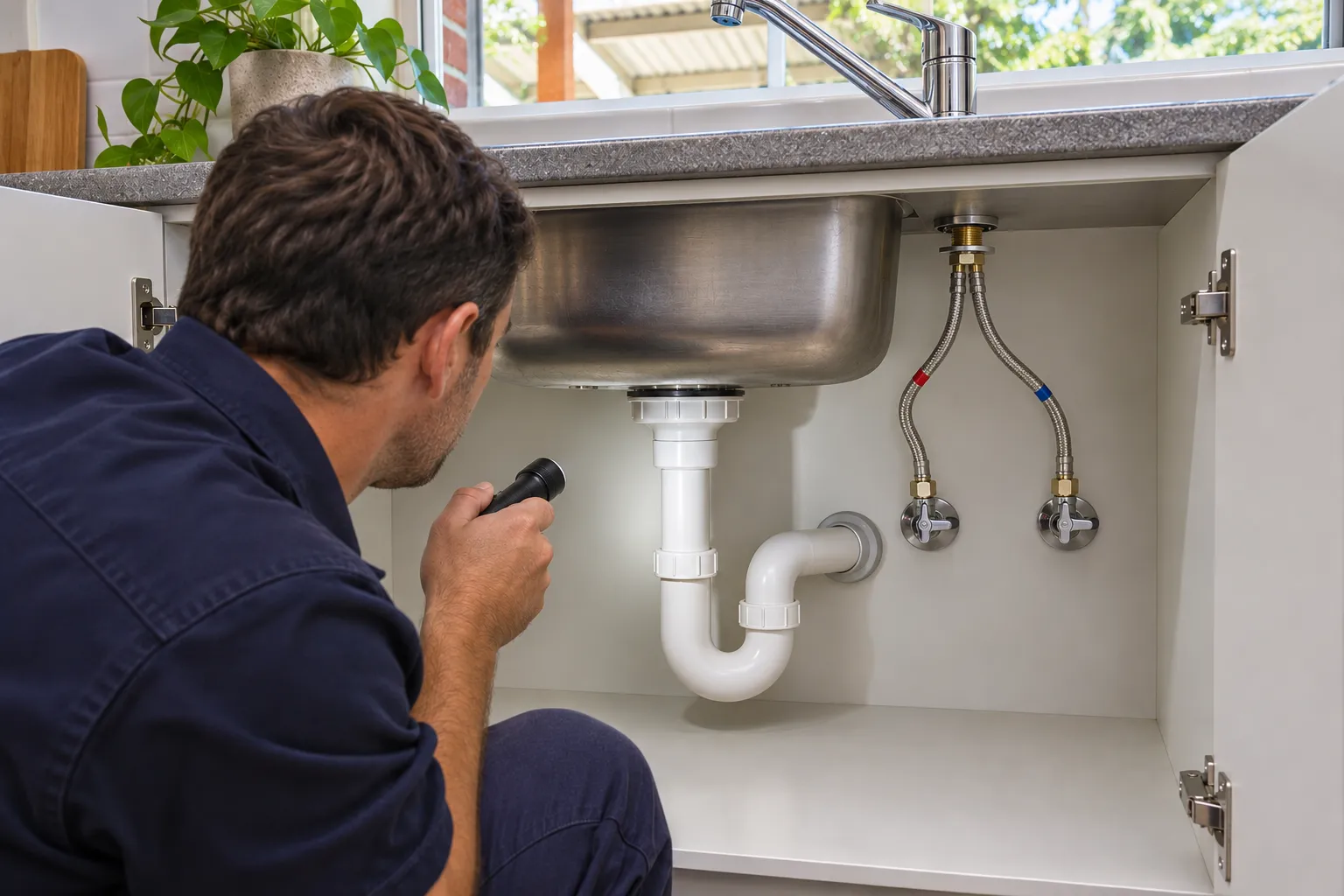
A Licensed Plumber Confirms Connections and Installation Requirements
The professional assessment should cover both the tap's physical fit and its compatibility with the water supplies. The replacement needs to suit the available pressure and the requirements of the hot water arrangement. Existing separate taps working adequately does not, by itself, prove that every mixer will perform well on those supplies.
Access beneath the fixture can also affect the job. A deep bowl, fixed cabinetry or tightly positioned connections may limit working room. Existing components may need attention before the new tap can be installed properly. These details are difficult to judge from above and should form part of the installation assessment.
Ask what the quoted work includes: removal of the old fittings, the proposed treatment of unused holes and any required connection changes. If compatibility remains uncertain, clarify what further inspection is needed before ordering. That helps you compare suppliers on the same scope rather than comparing a tap-only price with a complete replacement job.
Leave disconnection, alterations and installation to a licensed plumber, in line with Queensland’s plumbing requirements. Before work begins, confirm the selected tap model, its mounting position and the agreed finish for redundant openings. Where an assessment identifies a limitation, ask whether a different mixer would suit the existing fixture or whether retaining that fixture rules out the change you had in mind.