Hidden water leaks can cause costly property damage before the source becomes visible. Damp patches, peeling paint, swollen skirting boards and musty smells may signal a leak behind a wall.
Hop To It Plumbing helps identify hidden plumbing issues and find suitable repair solutions before the damage worsens.
A plumber in Brisbane can use specialised equipment to locate leaks with minimal disruption. Knowing how these methods work helps homeowners recognise warning signs early and protect their property from further damage.
What Causes Water Leaks Behind Walls?
Water leaks behind walls can develop for several reasons, including ageing pipework, damaged connections and wear around plumbing fixtures. Since these components are concealed, a leak may continue for some time before visible damage appears.
Here are some of its causes:
- Ageing or corroded pipes: Older pipes can deteriorate, develop small holes or weaken, allowing water to escape.
- Loose joints and damaged connections: Pipe joints and fittings can loosen, crack or fail, as plumbing materials age.
- Building movement: Shifting foundations, vibrations and structural movement can place pressure on pipes and connections, increasing the risk of damage.
- Leaking showers and fixtures: Failed waterproofing, worn seals or leaking connections around showers, taps and other fixtures can allow moisture to enter wall cavities.
The source is not always the pipe itself. Water can travel through building materials before appearing elsewhere, making the visible damage an unreliable indicator of the leak's exact location.
What Are the Signs of a Water Leak Behind a Wall?
Hidden water leaks can produce several warning signs, although some may resemble condensation, waterproofing problems or other forms of moisture damage. Paying attention to changes in the property can help identify a potential plumbing issue early.
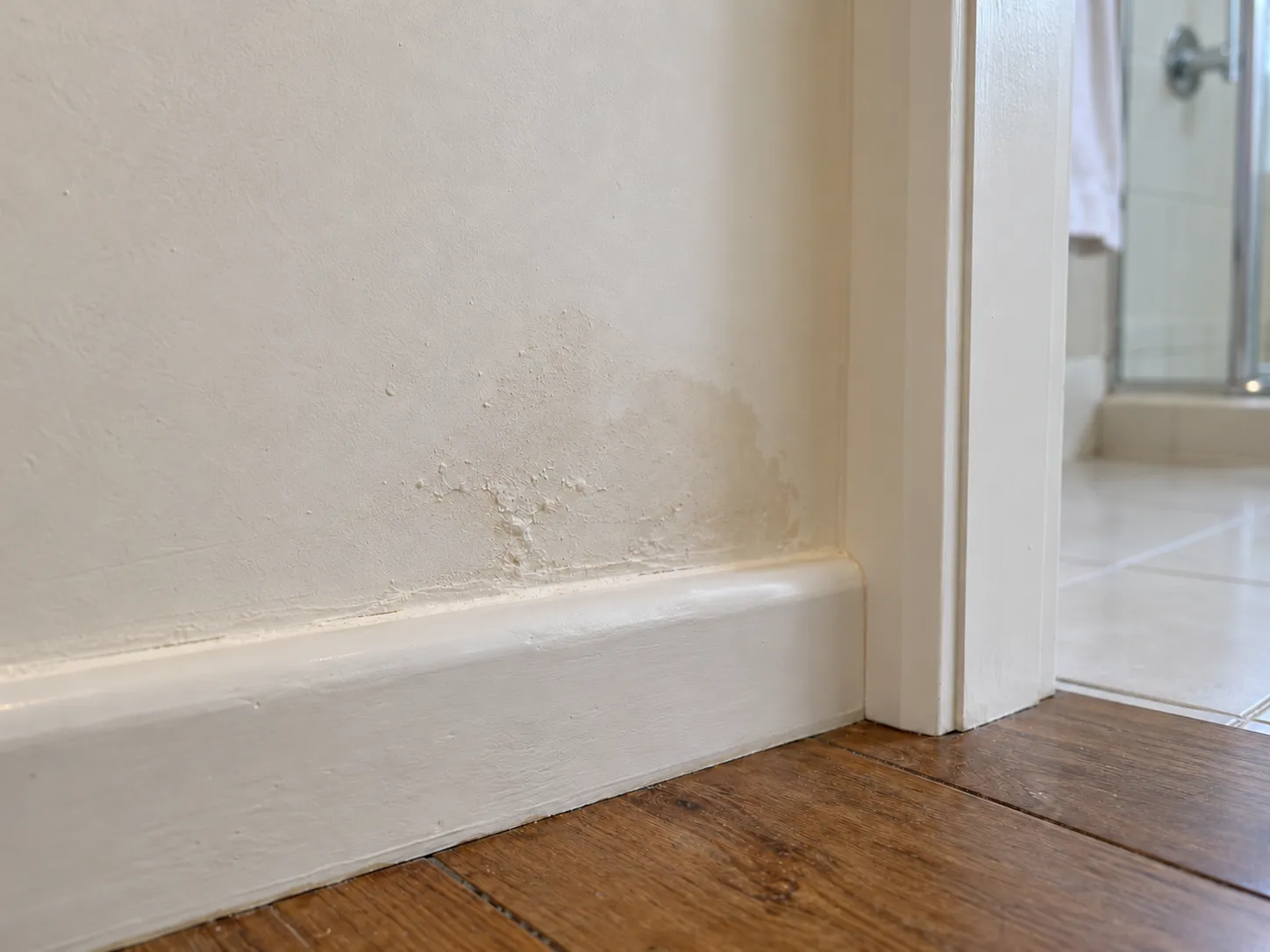
Beware of the following signs:
- Damp patches or discolouration: Yellow, brown or dark marks may develop on painted walls and ceilings.
- Peeling paint or bubbling wallpaper: Persistent moisture can weaken adhesives and cause surface finishes to lift or blister.
- Warped flooring or swollen skirting boards: Water can affect timber and other moisture-sensitive materials near the leak.
- Unusual sounds: Hissing, dripping or running water may be audible when taps and appliances are switched off.
- Musty smells or mould: Persistent dampness can encourage mould growth and create an unpleasant odour.
- Unexplained high water bills: Higher consumption without a clear reason may indicate water escaping from the plumbing system.
- Dampness near plumbing fixtures: Moisture around showers, sinks and toilets may indicate a leaking connection or a problem with nearby waterproofing.
Queensland Government guidance on checking for leaks explains how comparing water meter readings when no water is being used can help identify a possible leak on the property.
These signs do not automatically confirm a hidden pipe leak. A licensed plumber can inspect the affected area, assess the likely cause and determine whether further leak detection testing is needed.
Can Water Leaks Behind Walls Be Detected Without Damaging the Wall?
Yes. Professional leak detection can locate many hidden water leaks without immediately cutting into walls or removing building materials. Plumbers may use acoustic leak detectors, thermal imaging cameras and moisture metres to investigate the affected area and narrow down the likely source.
These methods help identify unusual sounds, temperature differences and elevated moisture levels that may indicate a leak. Non-invasive testing can reduce unnecessary damage to plasterboard, tiles and paintwork while helping determine where further investigation is required.
However, not every leak can be confirmed without physical access. If the results are inconclusive or the damaged pipe is difficult to reach, a plumber may need to carry out additional testing or make a small opening in the wall to confirm the location and complete the repair.
What Equipment Do Plumbers Use to Detect Hidden Water Leaks?
Professional leak detection equipment helps plumbers investigate concealed pipework and identify signs of escaping water. The most suitable tools depend on the pipe material, building layout, leak severity and surrounding conditions.
Known equipment includes:
- Acoustic leak detectors: These devices amplify sounds associated with escaping water, helping plumbers narrow down the location of a leak within concealed pipework.
- Thermal imaging cameras: These cameras detect temperature differences on surfaces that may indicate moisture or a change in conditions behind a wall. They do not directly see water or confirm a leak on their own.
- Moisture metres: These measure moisture levels in suitable building materials, helping identify areas that may have been affected by water.
- Tracer gas equipment: In suitable systems, a safe test gas can be introduced into isolated pipework. Specialised detectors can then identify where the gas escapes, helping locate difficult-to-find leaks.
No single tool is suitable for every situation. Plumbers may combine several methods to narrow down the search area and determine whether the suspected leak requires further testing or physical access.
How Accurate Are Professional Water Leak Detection Methods?
Professional leak detection can be highly effective when the right equipment is used and the results are interpreted alongside the property's plumbing layout and condition. However, accuracy varies depending on the type of leak, surrounding materials and accessibility of the pipework.
What Affects Detection Accuracy?
Several factors can influence how easily a hidden leak is located:
- Pipe material and depth: Pipework concealed deep within walls or beneath dense materials may be more difficult to assess.
- Leak severity: Larger leaks may produce clearer signs, while small or intermittent leaks can be harder to identify.
- Building materials: Insulation, tiles and wall construction can affect how sound, heat and moisture are detected.
- Background noise: Household appliances, traffic and other sounds can interfere with acoustic testing.
- Moisture from other sources: Condensation, external water ingress or failed waterproofing can produce readings that resemble a plumbing leak.
Thermal cameras detect temperature differences rather than water itself, while moisture metres identify elevated moisture levels without necessarily revealing the cause. These results need to be interpreted carefully to avoid mistaking another problem for a pipe leak.
Why Multiple Detection Methods Matter
Combining detection methods can provide a clearer picture of where a leak may be occurring. For example, a moisture metre may identify an affected section of wall, while acoustic equipment helps narrow the search to a particular pipe or connection.
Further testing may be required if the initial results are uncertain. In some cases, a plumber will need to access the pipe directly to confirm the damage before carrying out repairs.
The aim is to narrow down the likely source, confirm the problem as accurately as practical and avoid unnecessary damage to surrounding surfaces.
When Is It Necessary to Open a Wall to Access a Leak?
Opening a wall may be necessary when non-invasive testing cannot fully confirm the source of a leak or when the damaged pipe needs to be accessed for repair. Plumbers aim to limit the opening to the area required to reach the affected pipework.
When Access Is Needed
Physical access may be required when:
- The damaged pipe or fitting cannot be reached through an existing access point.
- Further inspection is needed to confirm the exact location or extent of the damage.
- A section of pipe needs to be replaced rather than repaired in place.
- Water has affected concealed insulation, timber or other materials that need to be inspected.
The amount of wall removal depends on the location of the leak, the construction of the property and the type of repair required. Some problems can be addressed through a small opening, while others may require more extensive access.
Why Prompt Repairs Matter
An active leak can continue damaging plasterboard, timber, insulation and nearby finishes. Prolonged moisture may also encourage mould growth and, where water reaches electrical components, create an additional safety risk. Arranging prompt plumbing repairs can help limit further water damage and reduce the extent and cost of restoration work.
A plumber will aim to make the smallest practical opening needed to access and repair the damaged pipe, reducing disruption and making restoration easier.
Can Hidden Water Leaks Cause Structural Damage?
Yes. Hidden water leaks can damage building materials when moisture remains trapped inside walls, floors or ceilings. The extent of the damage depends on how much water escapes, how long the leak continues and which materials are affected.
Timber framing can absorb moisture, swell and deteriorate over time. Plasterboard may soften or lose its strength, while persistent dampness can damage flooring, finishes and insulation. In prolonged cases, timber decay and corrosion of metal components may affect the condition of parts of the building. Mould can also develop in damp areas and affect indoor air quality.
WorkSafe Queensland’s guidance on mould prevention highlights the importance of addressing water leaks and controlling excess moisture.
Early detection helps limit these risks by identifying the source before moisture spreads further. If damp patches keep returning, paint continues to peel or a musty smell persists without an obvious cause, an inspection can determine whether a hidden leak is contributing to the damage.
How Long Does It Take a Plumber to Detect a Hidden Water Leak?
Detecting a hidden water leak may take around 30 minutes to several hours, depending on the location, severity and accessibility of the problem. Straightforward leaks may be identified quickly, while intermittent leaks or pipework concealed behind multiple layers of building materials can require more investigation.
What Affects Detection Time?
Several factors can influence how long the process takes:
- Pipe accessibility: Leaks near accessible fittings may be easier to investigate than those concealed behind tiled walls or beneath floors.
- Leak severity: A substantial leak may produce clearer signs, while a small or intermittent leak can be more difficult to trace.
- Building materials: Insulation, concrete, tiles and other materials can affect the results of detection equipment.
- Plumbing complexity: Multiple pipe runs, concealed connections or uncertainty about the affected system may require additional checks.
How Equipment Helps
Acoustic detectors, thermal imaging cameras and moisture metres help plumbers narrow down the likely source without immediately opening the wall. When the initial results are unclear, additional testing, such as pressure testing or tracer gas detection where suitable, may be necessary.
The detection process and the repair are separate stages. Even when the leak is located quickly, accessing the pipe, completing the repair and arranging any required drying or restoration work can take longer.
What Happens After a Hidden Water Leak Is Found?
Once a leak has been located, the next steps focus on stopping the water loss, repairing the damaged pipework and assessing the surrounding area. The exact process depends on the type of plumbing fault and the extent of the damage.
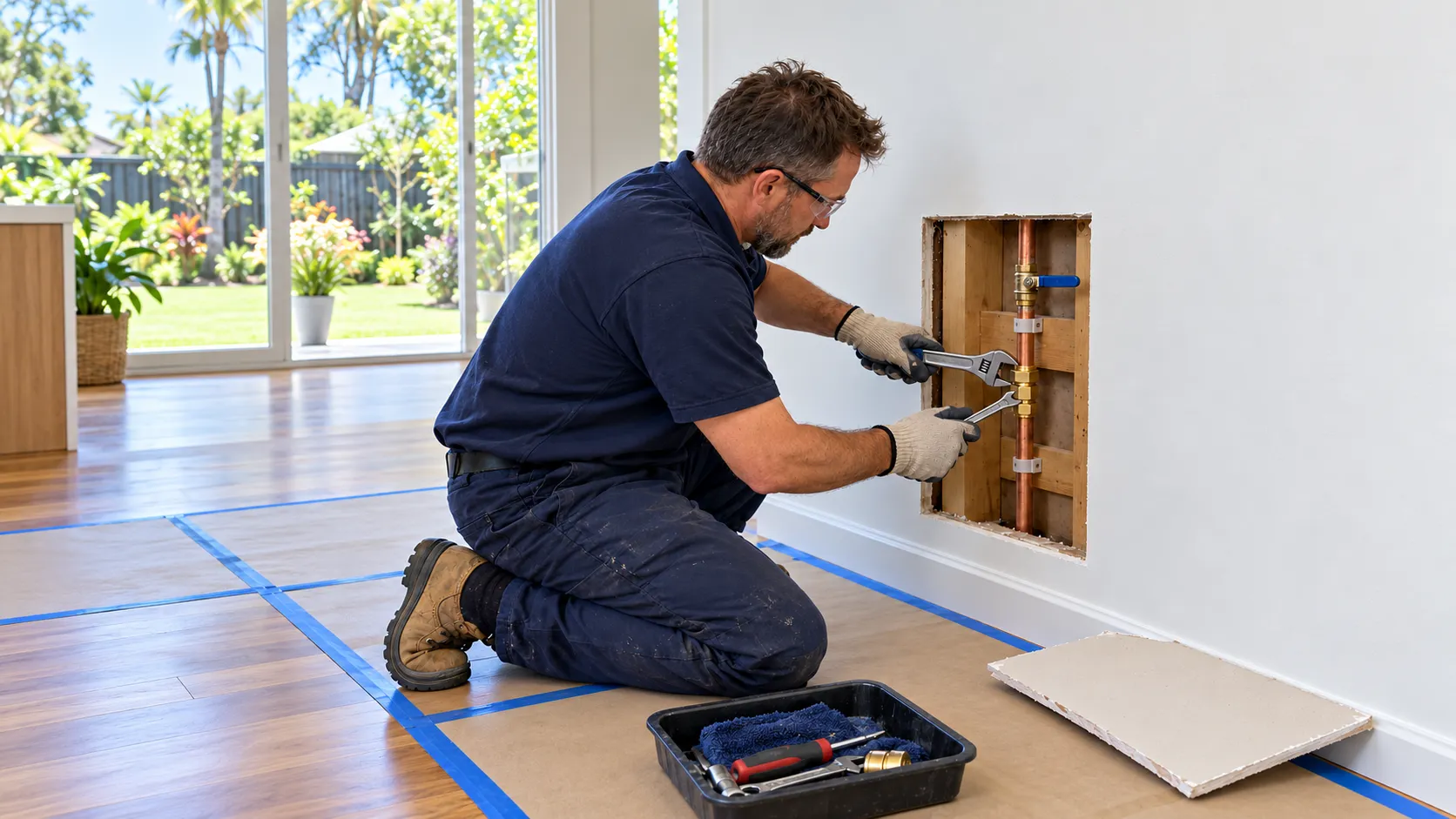
Typical steps include:
- Isolating the water supply: The plumber may shut off the relevant supply to stop or reduce the leak before repairs begin.
- Accessing the damaged pipe: An existing access point may be used, or a small section of wall or flooring may need to be opened.
- Repairing or replacing the pipe: The appropriate repair depends on the location, material and condition of the damaged section.
- Checking the repair: The plumbing system may be tested to confirm the repair has addressed the leak.
- Drying affected materials: Wet building materials may need time and suitable drying measures before surfaces can be restored.
- Restoring the area: Plasterboard, paint, tiles or other finishes may need repair once the plumbing work is complete and the area is sufficiently dry.
After repairing the pipe, the plumber can assess the surrounding materials and recommend any necessary drying or restoration work. They may also check for contributing issues, like deteriorated fittings or excessive water pressure, that could increase the risk of future leaks.
When Should Homeowners Call a Plumber for a Hidden Water Leak?
A plumber should be contacted when signs of a possible leak persist, return after surface repairs or appear without an obvious explanation. Early investigation can help distinguish a plumbing fault from condensation, external water ingress or another source of moisture.
Prompt attention is important when water stains are spreading, flooring is becoming soft or warped, or unexplained water consumption continues. If water is actively leaking through a ceiling, the affected area should be kept clear. Where water may have reached electrical fittings or wiring, avoid touching wet equipment and seek urgent assistance from a licensed electrician when it is safe to do so.
Waiting for the source to become visible can allow moisture to spread through concealed areas and increase repair costs. A licensed plumber can investigate the suspected leak, identify the likely cause and recommend suitable repairs based on the findings.
Hidden water leaks can cause extensive damage when left untreated, but early detection helps identify the source before moisture spreads further. Using appropriate detection methods and completing the necessary repairs can minimise disruption, protect building materials and reduce restoration costs.
Hop To It Plumbing can help homeowners investigate suspected leaks and identify suitable repair solutions. Prompt professional attention helps resolve plumbing issues at their source and protects the property from ongoing water damage.