-full-color-rgb-2000px-w-72ppi.webp)
When water suddenly stops running from the taps, it can disrupt everyday tasks and leave homeowners unsure whether the problem is inside the property or with the wider water supply. For those needing an emergency plumber in Brisbane, knowing what to check first can help identify the likely cause and determine how urgently professional assistance is needed.
Hop To It Plumbing helps homeowners work through the key checks, from testing different fixtures and comparing hot and cold water to inspecting the main isolation valve, water metre and signs of leaks or pressure problems. These simple checks can help protect the property, avoid unnecessary callouts and provide useful information when professional repairs are required.
Check Whether the Problem Affects One Tap, the Hot Water or the Entire Property
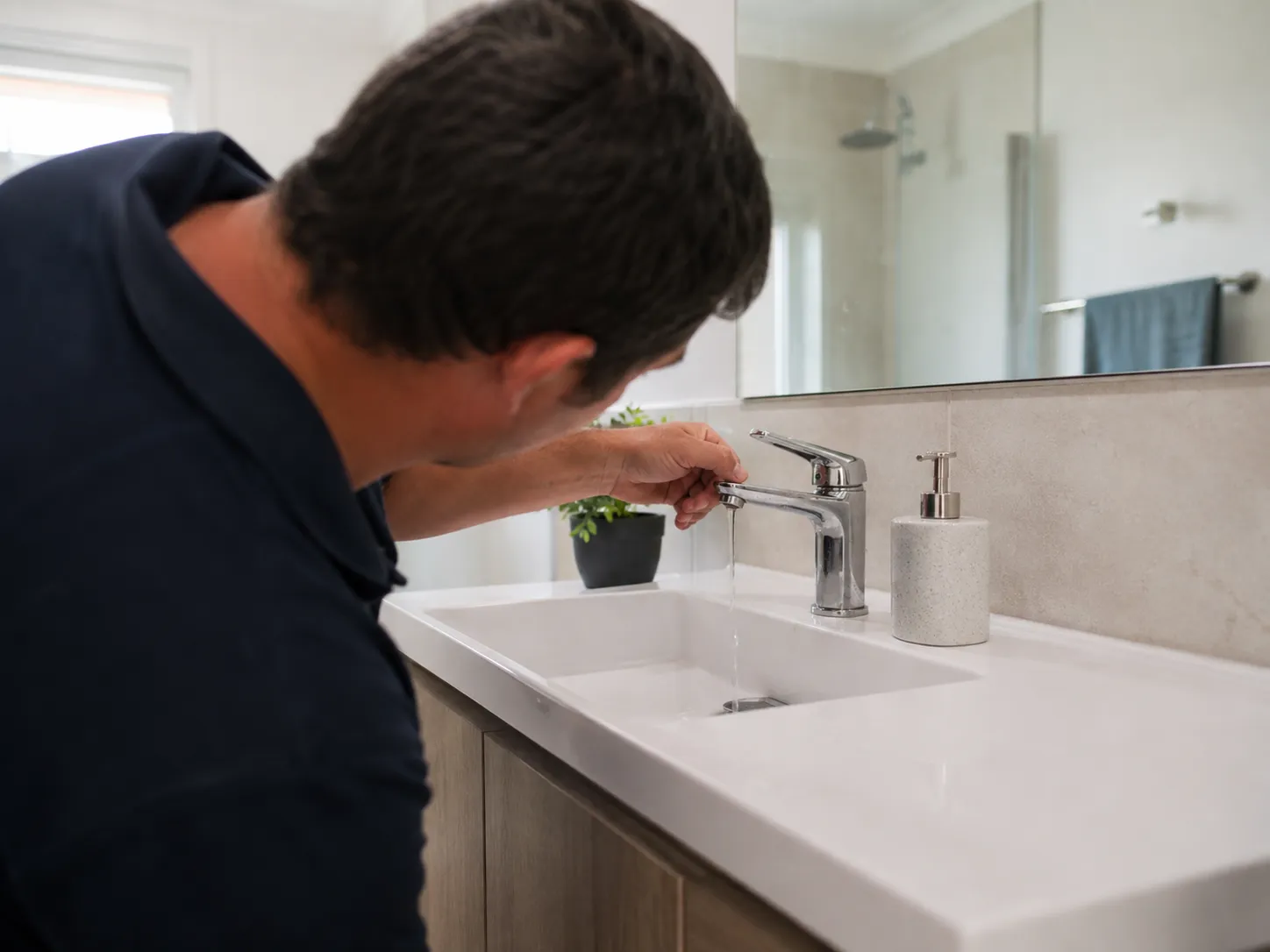
Before calling a plumber, first determine how widespread the loss of water is. Checking several fixtures and comparing hot and cold water can quickly indicate whether the problem is isolated to one tap, limited to the hot water system or affecting the entire property.
Check Individual Taps and Fixtures
Start with the tap where the problem was first noticed, then test other fixtures such as the kitchen sink, bathroom basin, shower and outdoor taps. Check whether there is no water at all or simply reduced pressure.
If only one tap is affected while others work normally, the problem is likely to be local to that fixture. A blocked aerator, faulty tap component or closed isolation valve can restrict flow. If several fixtures in the same room are affected but the rest of the property has normal water, the issue may involve a shared pipe or branch line.
Compare Hot and Cold Water
Test both hot and cold water at the same fixture to determine whether one supply is affected or both.
If cold water flows normally but hot water does not, the issue is more likely to involve the hot water system, its isolation valves or the hot water outlet line. If hot water works but cold water does not, the problem may involve a cold-water isolation valve or another restriction affecting that part of the plumbing.
When both hot and cold water stop at every fixture, the cause is more likely to involve the main supply or another whole-of-property issue.
Check Whether the Whole Property Is Affected
Test taps at different points around the property, including an outdoor tap if one is accessible. If there is no water anywhere, ask a neighbour whether they are experiencing the same problem.
If several nearby properties have also lost water, there may be an interruption to the local supply. If neighbouring properties have normal water but the entire property is affected, attention should shift to the main isolation valve, water metre, incoming pipework or another internal fault.
Very low water pressure throughout the property can also provide a useful clue. It may indicate a supply restriction, pressure-related problem or partial obstruction requiring further investigation.
Rule Out a Local Water Supply Interruption
Before investigating internal plumbing, confirm that the problem is not coming from the local water network. Planned maintenance, emergency repairs, damaged mains and other network issues can cause sudden outages or pressure drops that cannot be resolved by checking fixtures inside the home.
Urban utilities provides guidance for households experiencing no water and explains that interruptions may be caused by property plumbing, leaks, burst pipes or faults in the local network.
Check Whether Neighbours Are Affected
Ask nearby neighbours whether they have also lost water or noticed a significant pressure drop. If several properties are affected, the problem is more likely to be with the local water network.
If surrounding homes have a normal supply, the issue is more likely to be isolated to the property.
Look for Signs of Utility Work
Check the street and surrounding area for signs of water or utility work, including:
- Roadworks, barriers or excavations near water mains
- Utility vehicles or workers
- Freshly dug sections of the verge or road
- Notices about planned maintenance or service interruptions
Severe weather can also contribute to damaged mains and unexpected supply problems, particularly following major storms or flooding.
Check for Local Outage Information
Before arranging a plumbing visit, check for reported water service interruptions or other updates from the local water provider. Search using the property's suburb or postcode and note any reported outage or estimated restoration time.
If no interruption is listed, contact the provider directly to ask whether there is a known issue affecting the property or surrounding network.
If the wider supply is operating normally, attention can then shift to the property's valves, metre, pipework and other internal plumbing.
Check the Main Isolation Valve and Water Metre
If neighbouring properties have normal water supply, the next step is to check the property's main isolation valve and water metre. A valve may have been accidentally closed or partially shut, while a problem at the metre or incoming supply can restrict water to the entire home.
Main Isolation Valve
The main isolation valve controls water entering the property and is commonly located near the water metre, along the front boundary or where the main pipe enters the home. In units and townhouses, it may be located in a shared metre room or service area.
Check that the valve appears to be fully open. Depending on the valve type, a lever generally sits in line with the pipe when open, while a tap-style valve is typically turned anticlockwise.
Do not force a stiff or seized valve. Excessive force can damage the valve or cause a leak. If it will not move easily, leave it for a licensed plumber.
Water Metre
The water metre can provide a useful indication of whether water is reaching the property. With a tap open, observe the metre:
- The metre registers flow: This suggests water is reaching the metre, so the restriction may be further along the property's pipework.
- The metre does not register flow: There may be an issue with the supply, metre or associated valve.
- The metre or valve appears locked or tagged: Do not interfere with it. Contact the water provider for clarification.
If the main property valve is open but there is still no water inside while neighbours have normal supply, the problem is more likely to be on the property's side of the metre. A licensed plumber can investigate the incoming pipework, valves and other internal faults.
Check for Signs of a Burst or Leaking Water Pipe
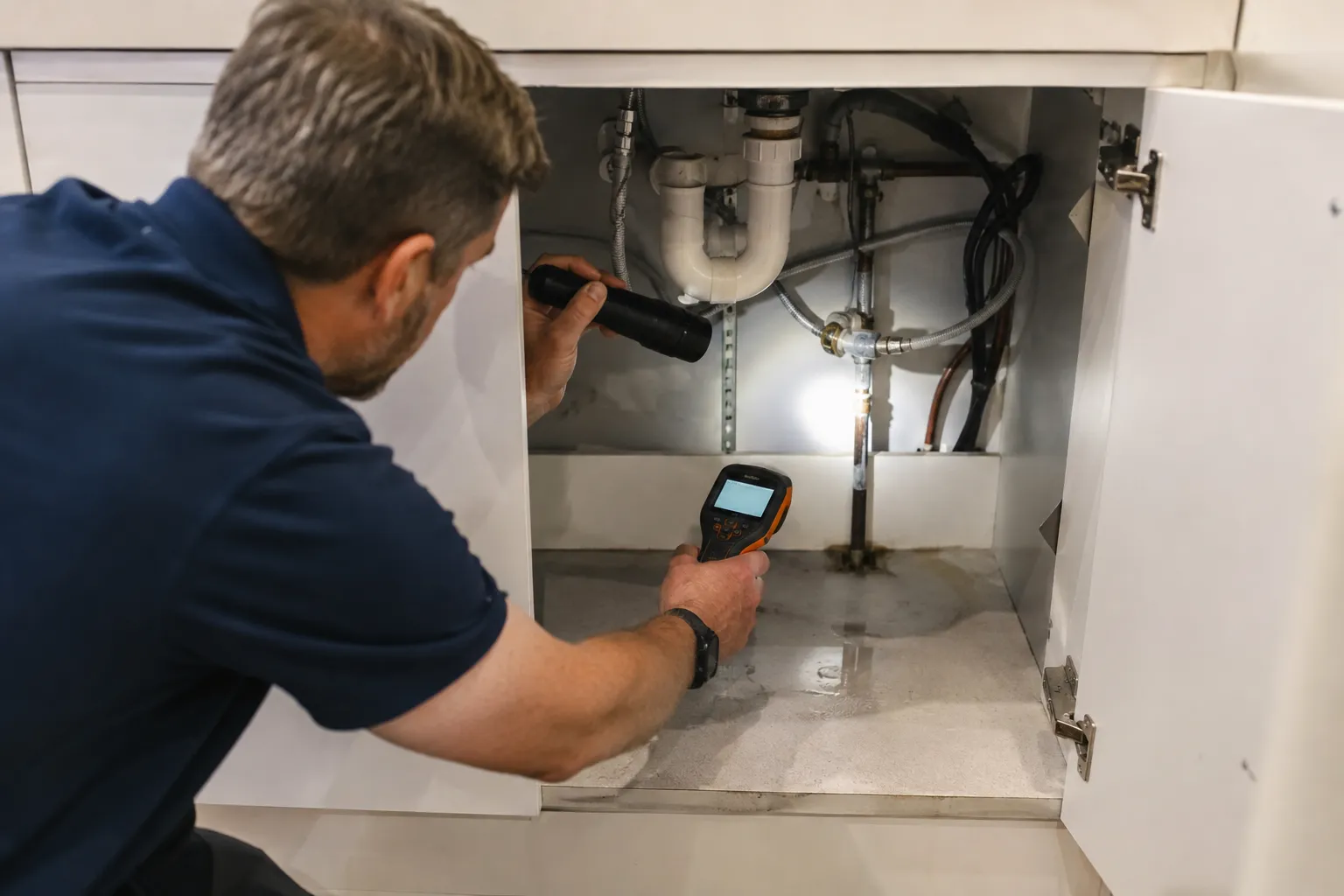
A burst or damaged pipe can cause water pressure to disappear suddenly, particularly when the affected pipe is part of the property's main supply. Before continuing to troubleshoot, look for signs of escaping water and consider whether the supply should be isolated to prevent further damage.
Look for Visible and Hidden Signs of a Leak
Check accessible plumbing areas like under sinks, around toilets, near the hot water system, in the laundry and around outdoor taps. Look for:
- Pooling or running water
- Damp walls, ceilings or floors
- Dripping joints or damaged fittings
- Unexplained wet patches or mould
- Hissing, rushing or dripping sounds when no water is being used
A concealed leak may not be immediately visible, particularly when damaged pipework is underground or inside a wall. Water escaping behind walls, beneath floors or underground may instead cause dampness, bubbling paint, mould or unexplained changes to flooring.
Check for Unexplained Metre Movement
Turn off all taps and water-using appliances, then check whether the water metre continues to register flow. If it does, there may be a leak somewhere on the property's side of the metre.
A sudden drop in pressure across several taps can also indicate a damaged main pipe or leak. If water is visibly escaping or entering walls, ceilings or areas near electrical components, stop investigating and isolate the supply if it is safe to do so.
A suspected burst pipe should not be left unattended. Once the water has been safely isolated, a licensed plumber can locate the source and determine whether the problem involves internal pipework, underground plumbing or a damaged connection.
Look for a Problem With Your Pressure or Pump System
If the property relies on a rainwater tank, bore, pressure pump or other boosted water system, a pump fault can cause weak or absent water flow even when the mains supply is operating normally.
Check the Pump and Water Source
When a tap is opened, a functioning pressure pump should normally activate as the system detects a pressure drop. Check:
- Whether the pump has power and its dedicated switch is on
- Whether a circuit breaker has tripped
- Whether the tank or other water source has an adequate level
- Whether an accessible supply or isolation valve has been closed
Do not open electrical components, dismantle the pump or interfere with pressurised fittings unless qualified to do so.
Watch for Unusual Pump Behaviour
Weak or inconsistent flow across several taps can indicate a problem with the pump, pressure controller, pressure tank or connected pipework. Warning signs include a pump that:
- Runs continuously when no water is being used
- Repeatedly starts and stops
- Makes unusual humming, rattling or grinding noises
- Fails to maintain normal pressure
If the pump has power and water available but still fails to deliver or maintain pressure, follow the manufacturer's instructions and have a licensed plumber investigate. Avoid repeatedly cycling a malfunctioning pump, as this may cause further damage.
Check Whether Recent Plumbing Work Could Be the Cause
If the water stopped soon after plumbing, renovation or maintenance work, the timing can provide an important clue. A valve may have been left closed, a connection disturbed or a flexi hose affected while another fixture or system was being serviced.
Check Recently Serviced Fixtures and Connections
Look at accessible isolation valves under sinks, behind toilets and near appliances or hot water systems that were recently worked on. Check exposed flexi hoses and fittings for moisture, dripping, kinks, sharp bends or visible damage.
If a valve is stiff or seized, do not force it. Likewise, avoid tightening or dismantling a connection if water is already leaking or you are unsure which valve controls it.
Consider Recent Main or Hot Water Work
If the entire property lost water after work near the main supply, metre, pressure system or hot water unit, a valve or connection may not have been restored correctly. If only hot water is affected, focus on recent work around the hot water system.
If everything appears open but the water has not returned, avoid repeatedly operating valves or dismantling fittings. A licensed plumber can check the work and identify any damaged, blocked or incorrectly connected components.
Plumbing Problems That Can Suddenly Stop Your Water
Several plumbing faults can cause water to stop suddenly. The likely cause depends on whether the problem affects the entire property, one area or only the hot water supply.
Here are some possibilities:
- Closed or faulty shut-off valves: A main or fixture isolation valve may have been accidentally closed, partially shut or failed internally. Stiff or corroded valves should not be forced.
- Blocked pipes or pressure regulator faults: Debris, scale or corrosion can restrict flow, while a failed pressure-reducing valve can cause a sudden drop in pressure across multiple fixtures.
- Hot water system problems: If cold water works normally but there is no hot water flow, the issue may involve a valve, blocked outlet or another fault around the hot water system.
Identifying which fixtures are affected and whether hot or cold water is still flowing can help narrow down the problem and give a plumber useful information when further investigation is required.
What to Do While You Wait for a Plumber
Once the basic checks suggest that professional assistance is required, the priority should shift from troubleshooting to preventing further damage. Avoid dismantling fixtures or repeatedly operating valves without knowing what is causing the problem.
Isolate the Water if There Is a Leak
If water is actively escaping from a pipe, fitting or appliance, turn off the main isolation valve if it is accessible and safe to operate. If the leak is limited to one fixture with its own isolation valve, shutting off that valve may be sufficient.
Never force a stuck or damaged valve. If water is near electrical equipment or entering an unsafe area, keep clear and do not attempt to reach the valve yourself.
Protect the Property
Where safe, move furniture, appliances and other belongings away from leaking or pooling water. Buckets and towels can help contain small amounts of water but should not be used where there is a risk of contact with electricity.
If water is coming through a ceiling, avoid standing underneath it. Saturated ceilings can become unstable, particularly when water has accumulated above them.
Avoid Unnecessary Repairs
Resist the temptation to dismantle taps, tighten unfamiliar fittings or repeatedly reset a pump while waiting for assistance. These actions can worsen the fault or make it harder to diagnose.
Instead, note what happened before the water stopped, whether the loss was sudden or gradual, which fixtures are affected and whether any recent plumbing work was completed.
Give the Plumber Useful Information
Providing clear information when booking the plumber can help them understand the problem before arriving. Mention:
- When the water stopped and whether it happened suddenly
- Whether the entire property or only certain fixtures are affected
- Whether hot, cold or both supplies are affected
- Any visible leaks, unusual sounds or pressure changes
- What you have already checked, including valves, the metre, pump or hot water system
- Any recent plumbing, renovation or maintenance work
Once the water has been isolated where necessary and the property is as safe as possible, leave further investigation to a licensed plumber. Knowing when to stop troubleshooting can prevent a plumbing fault from becoming a much more serious problem.
When to Contact Your Water Provider or a Plumber
The right contact depends on where the problem appears to be located. If neighbours are also affected or there is a known outage, the water provider is usually the first point of contact. If the problem is limited to the property, a licensed plumber can investigate the internal pipework, valves, fixtures or equipment.
Contact the water provider if:
- There is no water throughout the property and nearby homes are also affected
- Utility work is underway or a known outage has been reported
- There appears to be a problem with the street supply or metre
- The main property valve is open but there is still no indication of supply
Call a plumber if:
- Only part of the property is affected
- Only hot or cold water has stopped
- Neighbours have normal water but the property does not
- There is a visible leak or suspected burst pipe
- There are signs of a concealed leak, such as unexplained dampness or metre movement
- The problem began after plumbing, renovation, appliance or hot water work
In some situations, both may need to be involved. For example, the water provider may confirm that the street supply and metre are operating normally, after which a plumber can investigate the private pipework. Keeping a record of what has already been checked can help avoid delays and make it easier to identify the cause.
When the water supply suddenly stops, the priority is to establish whether the problem is isolated to a fixture, affecting the entire property or caused by an interruption to the wider water network. Checking other taps, comparing hot and cold water, speaking with neighbours and inspecting the main isolation valve and metre can help narrow down the cause without unnecessary troubleshooting.
If there are signs of a burst pipe, significant leak, pressure problem or equipment failure, further investigation should be left to a licensed plumber. Isolating the water and protecting the property from further damage should take priority over trying to identify or repair the fault yourself.
Hop To It Plumbing encourages homeowners to know the basics of their water system while recognising when professional assistance is needed. Acting promptly when a serious plumbing problem occurs can help minimise property damage, reduce disruption and get the water supply restored safely.