-full-color-rgb-2000px-w-72ppi.webp)
If your property isn't connected to the town sewer network, your septic tank or Home Sewage Treatment Plant (HSTP) plays an important role in managing household wastewater.
Understanding how your system works, what maintenance it needs and the warning signs of a problem can help you keep it operating reliably and avoid preventable issues. Hop To It Plumbing has put together this guide to cover some of the key things Southeast Queensland homeowners should know about looking after a septic tank or HSTP.
Understanding Septic Tanks and HSTPs
Septic tanks and HSTPs both manage wastewater onsite, but they work differently.
A septic system provides primary treatment before wastewater is dispersed through an underground disposal area, where the surrounding soil continues the treatment process. A Home Sewage Treatment Plant uses additional treatment processes and mechanical components to produce treated wastewater that is then dispersed through an approved land application or irrigation area.
Because HSTPs contain equipment such as pumps and blowers, they generally have more ongoing servicing requirements than a traditional septic system. Knowing which system is installed on your property is the first step towards looking after it correctly.
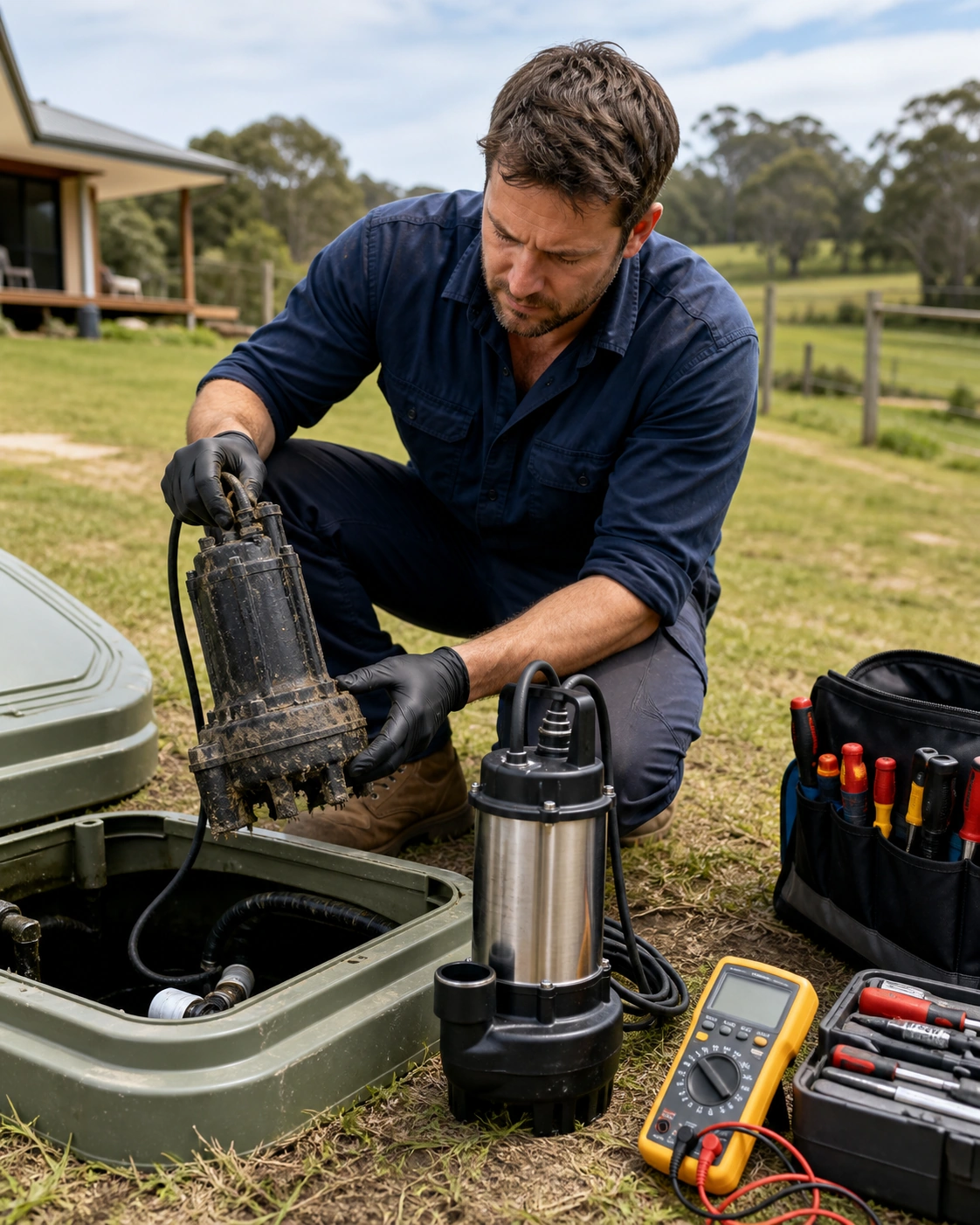
How to Look After Your Septic Tank or HSTP
Looking after your wastewater system mostly comes down to regular maintenance, sensible water use and being careful about what goes down your drains.
Arrange servicing when required, repair leaking taps and toilets promptly, and keep access lids and treatment areas clear. Where practical, spreading larger amounts of water use throughout the day can also reduce unnecessary strain on the system.
Avoid flushing wipes, nappies, sanitary products and other unsuitable waste. Fats, oils, paints, solvents and excessive amounts of harsh chemicals should also be kept out of household drains. Many normal cleaning products can be used responsibly, but it is best to follow the recommendations provided for your particular system.
Vehicles and heavy equipment should also be kept away from septic tanks, HSTPs, underground pipework and wastewater disposal areas to reduce the risk of damage.
Signs Your Wastewater System Needs Attention
Wastewater problems are not always obvious straight away, but there are a few warning signs worth paying attention to:
- Slow or frequently blocked drains
- Persistent unpleasant odours
- Wet or unusually soggy areas around the disposal or irrigation area
- An HSTP alarm sounding
- Unusual pump or blower noises
- Wastewater backing up into household drains
- Changes in how the irrigation or disposal area is operating
One warning sign does not necessarily mean the entire system has failed, but ongoing or unusual changes should not be ignored. Persistent odours, repeated alarms or changes in drainage can all indicate that the system needs to be checked.
How Often Should a Septic Tank or HSTP Be Serviced?
Servicing requirements depend on the type of system installed at your property.
HSTPs contain mechanical and treatment components that require scheduled servicing to check that the system is operating correctly. The required frequency can vary depending on the system, its approval conditions and servicing requirements.
Traditional septic systems do not usually follow the same servicing schedule, but the tank and disposal area still need to be monitored and maintained. Sludge and scum build up over time, so periodic pump-outs may also be required.
If you're unsure when your system was last checked or what servicing schedule applies, reviewing its records or arranging an inspection can help establish what is needed.
What Does an HSTP Alarm Mean?
An HSTP alarm is designed to alert you when the system detects something that needs attention. Depending on the system, this may relate to water levels, a pump, blower or another electrical or mechanical component.
An alarm does not automatically mean the treatment plant has completely stopped working, but it should not be repeatedly reset or ignored without determining the cause. Check the manufacturer's instructions for your system and arrange assistance from a licensed professional if the alarm continues or you are unsure what has triggered it.
Can Heavy Rain Affect a Septic Tank or HSTP?
Heavy rain can affect onsite wastewater systems when the surrounding ground becomes saturated. If the soil is already holding a large amount of water, wastewater may not disperse as effectively through the property's disposal or land application area.
During prolonged wet weather, watch for unusually wet ground, ponding, new odours, drainage problems or HSTP alarms. Avoid driving over or disturbing saturated disposal areas, and arrange an inspection if problems continue after conditions improve.
How Long Can a Septic Tank or HSTP Last?
There is no single lifespan that applies to every wastewater system. How long a septic tank or HSTP lasts depends on factors such as the type of system, installation quality, household use, site conditions and ongoing maintenance.
Routine servicing and inspections can help identify worn or ageing components before they develop into larger problems.
Need Help With Your Septic Tank or HSTP?
If something does not seem right with your wastewater system, or you're unsure what maintenance it requires, a professional assessment can help identify what is needed.
Hop To It Plumbing provides septic tank and HSTP inspections, servicing, maintenance, repairs and installations throughout Southeast Queensland. With more than 17 years of plumbing experience and QBCC Plumbing & Drainage licensing, we provide practical advice based on your system, property and wastewater requirements.
Contact Hop To It Plumbing for assistance with your septic tank or Home Sewage Treatment Plant.