
A fine line across your toilet bowl or around its base can leave you wondering whether you are looking at a harmless mark or damaged ceramic. The difference matters: a toilet pan supports weight and contains water, so its condition cannot be judged on appearance alone.
If you notice a suspected crack, you need to know whether to stop using the toilet, what information to give a plumber and why a household patch is not a reliable answer. For Brisbane homeowners comparing repair and replacement options, understanding those decisions also helps you assess whether a proposed solution addresses the damage rather than simply concealing it.
How Can I Tell Whether the Mark on My Toilet Is a Crack?
A surface mark and a crack can look surprisingly similar, particularly on curved, glossy ceramic. You may be able to describe what you see, but a photograph or a glance at the pan cannot reliably establish the depth or extent of damage.
Treat an unexplained line as a reason to seek advice rather than an invitation to test the toilet. Keeping a suspected damaged pan out of use allows a licensed plumber to assess it without further loading or disturbance.
Surface Marks and Deeper Damage Can Look Similar
Toilet ceramic has a glazed surface. Marks on that surface, fine lines in the glaze and damage extending into the ceramic underneath can be difficult to distinguish without an appropriate assessment. Lighting, staining and the curve of the bowl can all change how a line appears.
Location alone does not settle the question. A line inside the bowl may look different from a toilet base crack, but neither can be declared harmless simply because of where it sits. Some parts of the pan are also concealed by its shape, the floor or nearby fittings.
You do not need to scrape the line, run your fingers along it or press against the ceramic to gather useful information. Avoid touching any potentially sharp edges and do not sit on the toilet to test its strength. Those actions cannot provide a dependable diagnosis.
Instead, tell the plumber where the mark is visible and when you first noticed it. A photograph taken without leaning on or moving the toilet may help explain the concern. Its role is to support the conversation, not to prove that the pan is sound.
Moisture and a Changing Line Deserve Professional Attention
Mention any moisture you have already noticed near the line or on the surrounding floor. Also explain whether the mark appears longer or more noticeable than before. You do not need to flush the toilet or keep using it to find out whether water will appear.
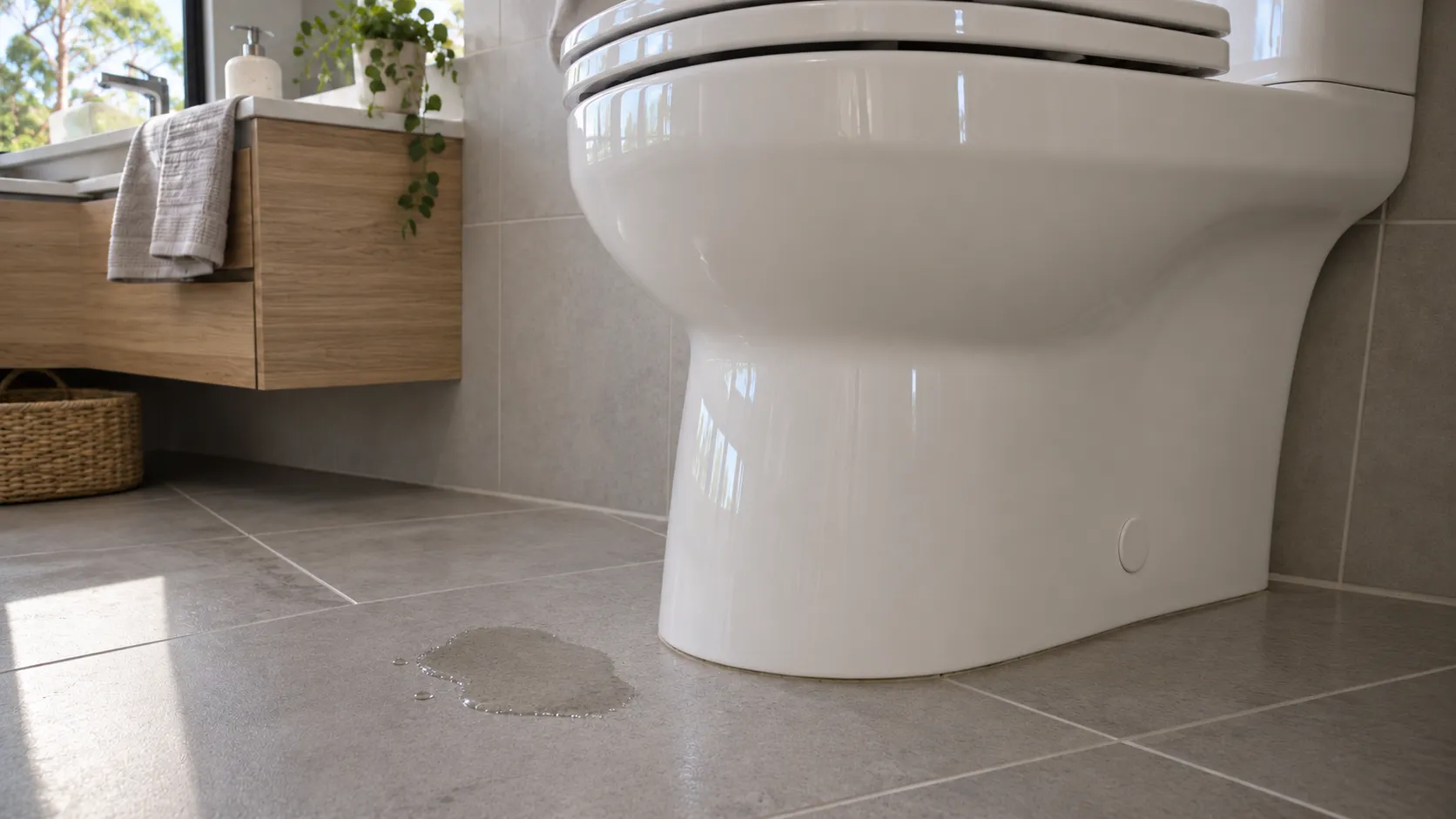
Moisture is useful information, but it is not a diagnosis. Water around a toilet can have more than one source, and a plumber needs to distinguish damage to the ceramic from a problem with another part of the installation.
Likewise, water running inside the bowl is a different symptom from a visible crack. If that is the issue you have noticed, this explanation of why a toilet keeps running addresses that separate problem. A running sound does not establish the condition of the pan, just as a quiet toilet does not rule out ceramic damage.
A Dry Floor Does Not Establish That a Damaged Pan Is Safe
A dry bathroom floor tells you only that you have not observed water escaping onto it. It does not establish whether a suspected crack is superficial, whether the ceramic remains sound or whether the toilet can safely continue in use.
The appropriate remedy depends on professional assessment. That may involve distinguishing a surface blemish from damaged ceramic and checking whether replacement is needed, rather than assuming every visible line has the same significance.
Ceramic Damage Can Matter Even Without Visible Leakage
A toilet pan does more than hold water. It also carries the loads placed on it during normal use. A suspected crack therefore raises a question about the condition of the fixture, not just its ability to remain watertight at a particular moment.
Some visible lines may be above the usual water level. Others may be on an external part of the pan where you would not necessarily expect water to appear. The absence of a puddle cannot tell you how far a line extends through the ceramic or what is happening in a concealed area.
That does not mean every mark predicts an imminent failure. It means there is too much uncertainty to use a dry floor as permission to continue using a suspected damaged toilet. A licensed plumber should assess the concern before you rely on the fixture again.
The same distinction applies if the toilet has seemed normal for some time. Previous use without an obvious problem is not a test of its present condition. If you have just discovered the mark, explain that timing honestly rather than assuming the damage must be recent or longstanding.
Adhesives and Sealants Do Not Establish Structural Soundness
A product that covers a line or appears to stop moisture does not establish that the ceramic underneath is sound. Watertightness and structural condition are different questions. Improving the appearance of a damaged area does not answer both.
Household adhesives, fillers and sealants should not be treated as a substitute for assessment of a cracked toilet pan. A patch may also obscure the original line, making the visible condition harder to assess. Avoid applying a cosmetic repair while waiting for advice.
If a previous owner or earlier repair has already covered the area, tell the plumber. Describe what you know without trying to remove the material yourself. The plumber can decide how that affects the inspection and the recommendation.
When comparing suppliers, ask what finding supports the proposed remedy. If replacement is recommended, the explanation should connect to the condition of the pan and the existing installation. A useful answer distinguishes between concealing a mark, addressing a leak and replacing ceramic that should no longer remain in service.
Should I Stop Using My Toilet While I Wait for Advice?
Keep a toilet with suspected ceramic damage out of use and contact a licensed plumber promptly. You do not need to establish the full extent of the crack before asking for help, and continued use is not a suitable way to test it.
How urgently you need attendance also depends on what is happening around the toilet and whether you have another usable toilet. Explain both the physical symptoms and the practical situation when you call.
Keep a Suspected Damaged Pan Out of Use
Let everyone in the household know that the toilet should not be used. Keep children and visitors away from the damaged fixture, particularly if there are exposed edges or broken pieces. Do not place weight on it, lean against it or attempt to move it.
If another toilet is available, use that while you arrange assessment. Avoid repeated flushing to check whether the suspected crack leaks. A single dry observation does not establish safety, and repeating the test does not remove that uncertainty.
Before calling, gather information you already know: where the line is, whether you have seen moisture and whether there was a recent impact or movement. There is no need to handle the pan or inspect behind it if doing so would bring you into contact with damaged ceramic.
Ask the plumber what precautions are appropriate for your particular installation while you wait. Any work on the toilet, its connections or its removal should remain with a licensed professional. Do not loosen fixings, disconnect the water supply fittings or attempt a temporary repair.
Active Leakage or an Unusable Only Toilet Needs Prompt Attention
Active leakage changes the situation because water may continue affecting the surrounding area. Keep people away from leaked water, particularly if it may be contaminated, and describe the leakage clearly when requesting help. You should not have to approach damaged ceramic to prove where the water is coming from.
For a broader explanation of communicating an urgent plumbing problem, see this homeowner first-response advice. The key issue here remains the suspected damage to the pan, rather than assuming the toilet is blocked or overflowing.
If it is your only toilet, say so at the start of the call. Losing access to the only usable toilet changes the practical urgency even if the floor is dry. Explain any access constraints and ask what attendance arrangements are available, without assuming a particular response time.
If you need an emergency plumber Brisbane, Hop To It Plumbing can be contacted to discuss the damaged toilet and the need for assessment. Confirm availability, the initial assessment process and whether any replacement decision will depend on an on-site inspection.
Replacement Depends on More Than the Appearance of the New Toilet
If assessment identifies a need for toilet pan replacement, choosing a similar-looking model is only part of the decision. The replacement must suit the existing connections, available space and installation conditions.
A licensed plumber should assess compatibility before you purchase a fixture. This helps avoid choosing a toilet that looks suitable in a photograph but requires different connections or does not fit the room as expected. Before purchasing a replacement, ask your plumber to confirm that the proposed toilet has the required WaterMark certification and WELS registration.
The Waste Connection and Available Space Affect Compatibility
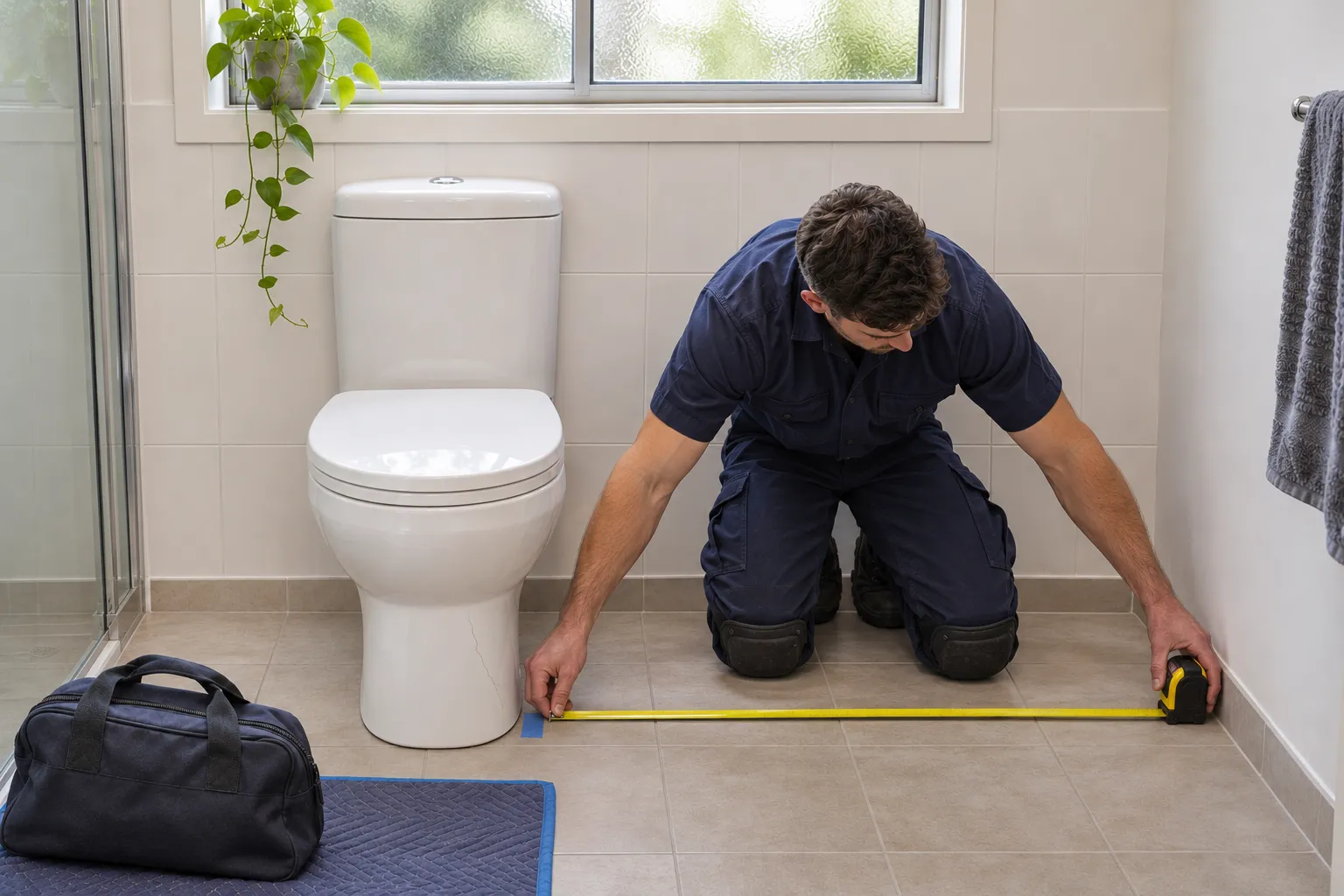
Toilets can discharge through different outlet arrangements, including connections towards the floor or wall. The position of the existing waste connection affects which replacement options are suitable. External appearance alone does not reveal those requirements.
The relevant measurements also extend beyond the width of the pan. The distance between the wall and waste connection, the position of the water supply and the room available around the toilet can all influence the choice. A replacement may occupy a different footprint even if it looks broadly similar.
Fixing arrangements matter too. The plumber needs to consider how the existing pan is secured, the condition of the supporting surface and how the replacement will be installed. Old fixing locations or marks on the floor may not align with a new fixture.
Before accepting a quote, ask whether the proposed replacement has been checked against the existing installation. Clarify whether the scope includes the pan alone or other components needed for compatibility, along with removal of the damaged fixture. Those details make comparisons between suppliers more meaningful than comparing product appearance alone. Before approving the work, review the Queensland Government’s guidance on what to check before accepting a quote, including whether it covers every part of the job.
If compatibility cannot be confirmed until the damaged pan is removed, ask how any additional findings will be explained and approved. That is different from assuming every replacement will be a straightforward like-for-like exchange.
The Plumber Should Assess the Cause of the Damage
Replacing the pan addresses the damaged fixture, but the plumber should also consider what may have contributed to the crack. A known impact is useful information. So are observations of movement, previous work around the toilet or damage near a fixing point.
Installation stress or uneven support may warrant investigation. These are possibilities for professional assessment, not conclusions you can draw from the shape of a line. The cause may remain uncertain, particularly where there is little reliable history.
Tell the plumber about anything relevant without trying to demonstrate movement or expose the fixings. Removing the toilet and checking the installation are professional tasks, especially where damaged ceramic is involved.
The replacement scope should explain how any identified installation concern will be addressed. If the plumber finds a support or fixing issue, ask how that affects the proposed work before the new toilet is installed. This keeps the discussion focused on a suitable installation rather than simply exchanging one visible fixture for another.