Slow drainage, gurgling noises and recurring blockages can point to accumulated waste or an underlying problem within a drainage system. For property owners dealing with blocked drains in Brisbane, Hop to it Plumbing can assess the cause and determine whether hydro jetting or another clearing method is suitable.
Hydro jetting uses high-pressure water to break apart suitable obstructions and remove deposits from pipe walls. It can improve flow by clearing grease, sludge, silt and some root growth. However, it does not repair damaged pipework, and blockages may return if the underlying cause remains unresolved.
Understanding how hydro jetting works, what happens during a professional service and when another approach may be needed helps property owners recognise the difference between clearing a drain and resolving a recurring drainage problem.
What Is Hydro Jetting?
Hydro jetting is a professional drain-cleaning method that uses pressurised water delivered through a specialised hose and nozzle. The water dislodges accumulated material inside the pipe and helps move loosened debris out of the treated section.
It is used in residential and commercial drainage systems, including suitable sewer and stormwater lines. Its effectiveness depends on the blockage, the condition and layout of the pipework, and the equipment selected.
How Hydro Jetting Works
A jetting machine supplies water through a pressure-rated hose to a nozzle inserted through a suitable drainage access point. Different nozzles produce different spray patterns and are selected for tasks such as penetrating an obstruction, cleaning pipe walls or cutting suitable root growth.
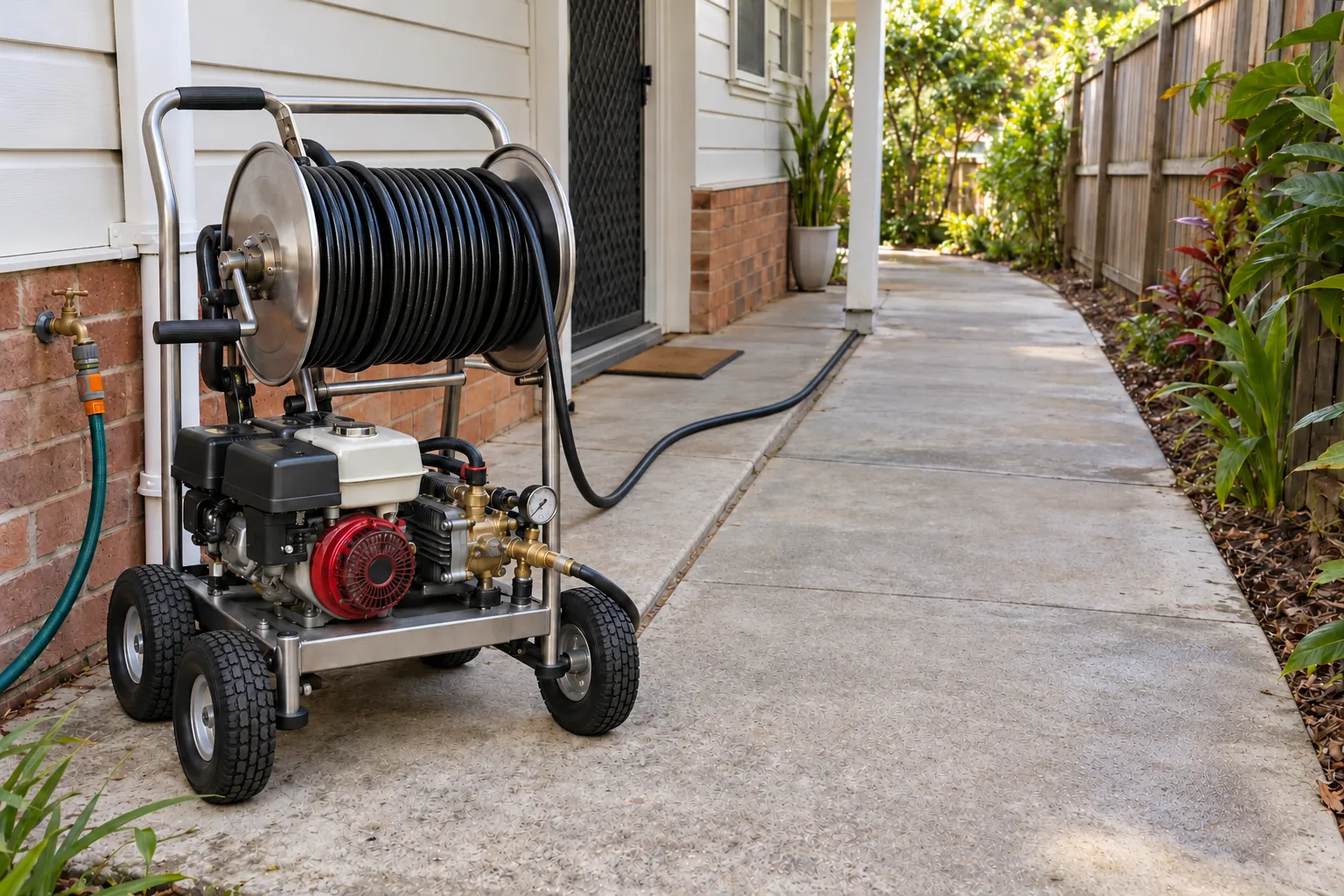
Rear-facing jets help propel the hose into the drain and flush loosened material towards the access point. Depending on the nozzle design, forward-facing or rotating jets help break apart obstructions and remove deposits. Cleaning takes place through controlled passes, including withdrawal of the hose.
The plumber selects water pressure, flow rate and nozzle size to suit the equipment, pipe diameter, pipe condition and material being removed. A higher pressure setting is not automatically the most effective or appropriate choice.
Hydro Jetting vs Traditional Drain Clearing
Plungers, drain augers and electric drain-cleaning machines all have useful roles. A plunger may resolve a small local blockage, while mechanical equipment can retrieve certain objects, cut roots or break apart compacted material using suitable attachments.
Hydro jetting is particularly useful when deposits extend along a pipe or coat its walls. Water can remove accumulated material beyond the immediate obstruction, which may reduce the likelihood of another blockage caused by remaining deposits.
Neither method is suitable for every situation. Some drains require a combination of mechanical clearing and jetting, while others need repair. The choice should follow an assessment of the cause and the condition of the drainage system.
When Hydro Jetting Is Appropriate
Hydro jetting may be recommended for recurring grease blockages, accumulated silt, sludge or suitable root growth. It can also be useful for longer drain runs where deposits are difficult to remove with basic tools.
Before proceeding, the plumber assesses whether the pipework can tolerate the proposed cleaning method. Severely damaged, deformed or collapsed pipes may require a different approach.
What Types of Drain Blockages Can Hydro Jetting Remove?
Hydro jetting can clear several common types of drainage obstruction. However, the result depends on how firmly the material is attached, how much has accumulated and whether the underlying pipe remains serviceable.
Grease, Soap Scum and Food Build-up
Fats, oils and grease can accumulate inside kitchen waste pipes, trapping food particles and restricting flow. Soap residue and other soft deposits can also contribute to narrowing in household drains.
Jetting can break apart and flush away much of this material, improving the available flow path. The extent of cleaning should be checked rather than assumed, particularly where deposits are heavy or access is limited.
Cleaning does not prevent new build-up if the same disposal habits continue. Keeping fats, oils and food scraps out of drains helps reduce recurrence. Simple changes to waste disposal habits can help prevent kitchen drain blockages.
Tree Roots and Organic Debris in Sewer Lines
Tree roots can enter drainage pipes through cracks, open joints or other defects. Once inside, they may trap toilet paper and wastewater solids, creating recurring obstructions.
Urban Utilities explains how tree root intrusion can cause blockages and offers planting advice to help protect underground pipes.
Suitable jetting nozzles can cut and remove some root growth. Dense or woody root masses may need mechanical cutting or another approach before the drain can be cleared effectively.
Removing roots does not seal their entry point. If the defect remains, roots may return, so repairs or relining may be needed where appropriate. Follow-up inspection helps establish whether cleaning alone is sufficient.
Leaves, silt and organic sludge can also obstruct stormwater drains. Their removal depends on the available access and the ability to flush or collect the material without creating another blockage further along the system.
Scale, Mineral Deposits and General Build-up
Some drains contain hardened deposits as well as softer sludge and debris. Hydro jetting may remove suitable deposits, but strongly bonded scale can require specialised descaling equipment or a combined cleaning approach.
Where corrosion has weakened the pipe, removing deposits may expose existing damage. Assessment is particularly important before cleaning older metal drainage pipes.
When Hydro Jetting May Not Be Suitable
Hydro jetting cannot correct a collapsed pipe, a displaced joint, poor drainage fall or a sagging section that collects waste. Clearing accumulated material may improve flow temporarily without resolving these underlying problems.
Solid objects and construction debris may also require retrieval or another removal method. Jetting should not be treated as a universal solution for every obstruction.
What Happens During a Professional Hydro Jetting Service?
A professional service generally involves assessment, equipment selection, controlled cleaning and checks of the result. The sequence can vary according to access, blockage severity and the visibility inside the drain.
Initial Inspection and Drain Assessment
The plumber first reviews the symptoms, identifies which fixtures are affected and locates suitable inspection openings. Previous blockages, repairs and known pipe materials can help guide the assessment.
Where practical, a CCTV drain inspection is used to locate the obstruction and assess visible pipe conditions. It may identify root entry points, cracks, displaced joints or other defects that affect the choice of clearing method.
A heavily blocked drain may prevent the camera from passing or provide poor visibility through standing wastewater. In these cases, limited initial clearing may be necessary before a more useful inspection can take place. A camera assessment can only establish the condition of the sections that are accessible and visible.
Setting Up the Hydro Jetting Equipment
Jetting equipment may be portable, vehicle-mounted or trailer-mounted. The plumber selects a suitable hose, nozzle and operating settings for the drain rather than relying on one standard pressure for every job.
The work area is prepared to control access, wastewater and possible splashback. Fixtures and nearby areas are protected where necessary, and the hose is introduced through a suitable access point.
High-pressure water can cause serious injury if handled incorrectly. Drain jetting should be carried out by trained professionals using appropriate equipment and controls.
Jetting, Cleaning and Final Verification
The operator guides the hose through the drain and uses controlled cleaning passes to dislodge suitable material. Difficult sections may require additional passes, a different nozzle or a change in clearing method.
Loosened debris is flushed or collected as appropriate for the drainage system and the type of material involved. Sewer, stormwater and septic systems require different considerations; material should not simply be pushed into any available outlet.
After clearing, drainage is checked and a follow-up camera inspection may be used to assess the accessible pipework. This can reveal remaining deposits or defects that were previously hidden. The plumber then explains the findings and any need for further cleaning, repairs or maintenance.
Can Hydro Jetting Damage Your Pipes?
Hydro jetting can be suitable for drainage pipes in serviceable condition when the equipment and operating method are matched to the job. However, its suitability depends on the condition of the individual drain, and damage is possible if the pipe is weakened or the equipment is used incorrectly.
When Hydro Jetting Is Safe
Suitability depends on more than the material alone. The plumber also considers pipe age, diameter, wall condition, joints, previous repairs and the type of obstruction.
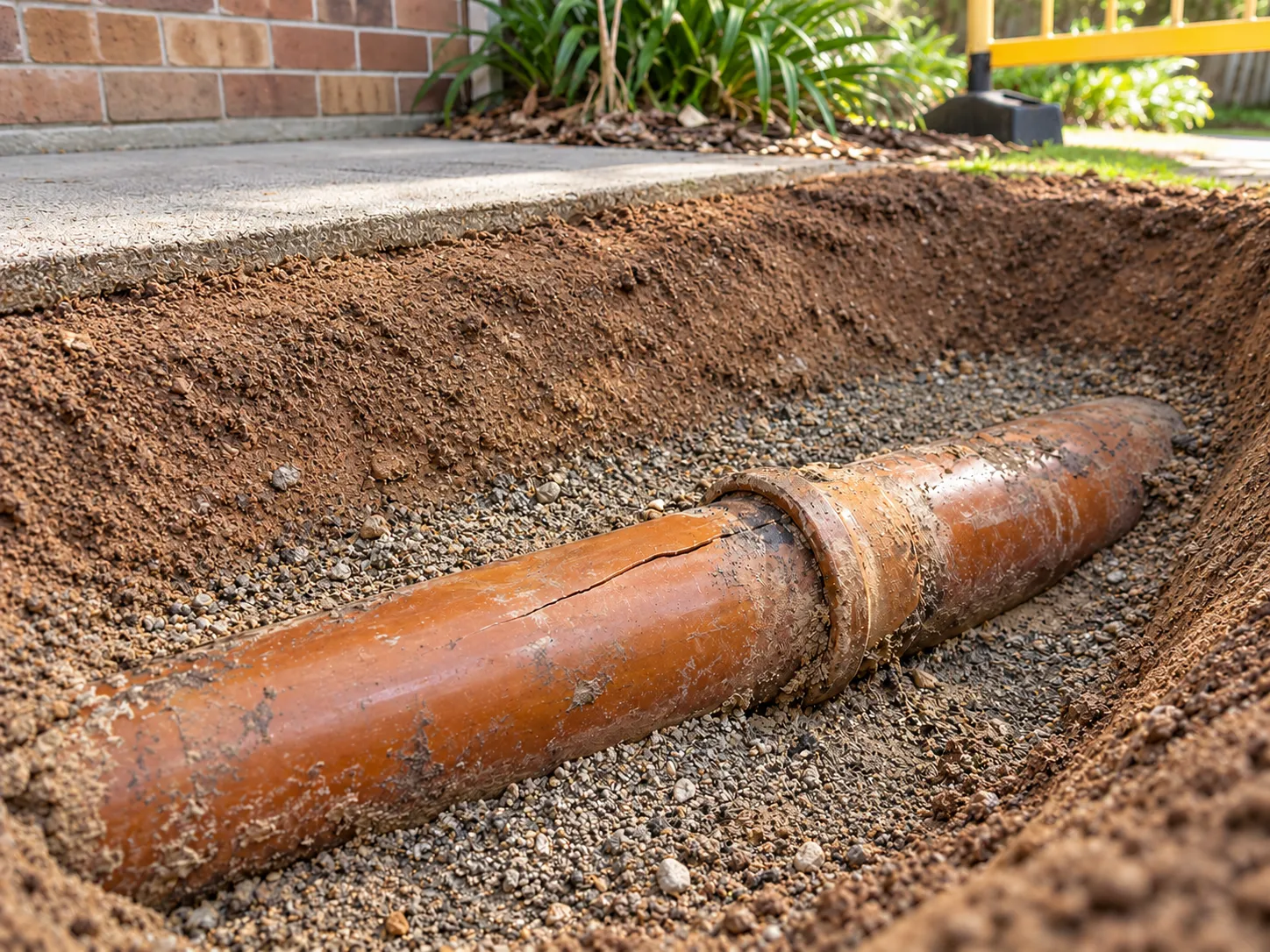
PVC, clay, concrete and cast-iron drainage pipes may be candidates for jetting following assessment. A pipe should not be assumed suitable simply because it belongs to one of these categories.
Correct nozzle selection, water flow, pressure and operating technique help manage the risk of damage. Visible defects may require a modified approach or an alternative method.
Situations Where Hydro Jetting Can Be Risky
Risk increases where pipes have advanced corrosion, cracks, brittle sections, weakened joints or defective repairs. Jetting may worsen existing defects or expose holes previously covered by deposits.
An operator must also consider the possibility of wastewater backing up into fixtures when an obstruction prevents water from escaping. Pipe condition and available drainage paths influence how the work is approached.
How Professionals Minimise the Risk of Damage
Professionals reduce risk by assessing accessible pipework, selecting suitable equipment and monitoring the drain during cleaning. Camera inspection, where practical, helps guide the approach and check the result.
If the pipe appears unsuitable for jetting, the plumber may recommend another clearing method, a localised repair, relining or replacement. Mechanical clearing also requires care and should not automatically be considered safe for a severely weakened pipe. QBCC provides guidance on licensed plumbing work, including how property owners can check a plumber’s licence.
Where blockages keep returning, further investigation is more useful than repeatedly clearing the same section without identifying the cause.
Hydro jetting can restore drainage by removing accumulated material, but the best result depends on matching the cleaning method to the blockage and the condition of the pipework. Where cracks, damaged joints or recurring root intrusion are involved, clearing the obstruction may be only part of the solution.
Professional assessment helps establish whether cleaning alone is sufficient or repairs are needed to address the cause. Hop to it Plumbing can help property owners understand their drainage problems and choose an appropriate approach to clearing, repairs and ongoing maintenance.