-full-color-rgb-2000px-w-72ppi.webp)
A suspected gas leak demands immediate attention. Escaping natural gas or LPG can create a serious fire, explosion or oxygen displacement risk, particularly when it builds up in an enclosed area. As a trusted emergency plumber in Brisbane, Hop To It Plumbing understands how important it is to recognise the warning signs, leave the area safely and arrange professional assistance without delay.
This article explains the common signs of a gas leak, the locations where leaks can develop and the immediate steps to take when something seems wrong. It also covers the difference between a fuel gas leak and carbon monoxide exposure, actions that should be avoided and how regular gas appliance checks can reduce the risk of future problems.
Common Signs You May Have a Gas Leak
Gas leaks can begin at appliances, pipe connections, valves, meters, regulators or underground supply lines. Some leaks are immediately noticeable, while others may start slowly and become more serious over time.
Natural gas and LPG are naturally colourless and odourless. An odorant, commonly a mercaptan, is added to create the distinctive rotten egg-like smell that helps people detect a leak. Natural gas tends to rise because it is lighter than air, while LPG is heavier and may collect in low areas, drains and enclosed spaces.
Any unexplained gas smell, hissing sound or visible damage around gas equipment should be treated seriously.

Unusual Smells and Sounds
The most recognisable sign of a gas leak is a strong smell similar to rotten eggs or sulphur. The odour may be strongest near:
- Gas cooktops and ovens
- Hot water systems
- Heaters and fireplaces
- Gas meters and regulators
- LPG cylinders
- Cupboards or wall cavities containing gas pipework
A leaking pipe or connection may also produce a soft but persistent hissing, whistling or blowing sound. This can occur behind an appliance, around a regulator, near a gas meter or where a flexible hose connects to a fixed gas point.
A hissing sound from gas pipework should never be investigated closely. Avoid touching the fitting or attempting to locate the exact source.
Visible Signs Around Appliances and Pipework
Some visible changes may indicate escaping gas, while others point to unsafe appliance operation or incomplete combustion.
Possible signs of a leak include:
- Damaged, cracked or deteriorated flexible hoses
- Corrosion around pipes, valves or regulators
- Bubbles in puddles above underground gas lines
- Dust or loose soil being disturbed near a buried pipe
- Vegetation suddenly dying or turning yellow along a gas line route
Changes in appliance performance may indicate a combustion, ventilation or supply problem rather than a leak from the pipework. Warning signs include:
- Flames that are unsteady, sputtering or different from their normal appearance
- Yellow or orange flames on an appliance that should normally produce a steady blue flame
- Soot, scorch marks or dark discolouration around burners, vents or flues
- Pilot lights that repeatedly go out
- Burners that click but do not ignite properly
- Unusual popping, roaring or whistling noises
Queensland gas safety guidance recommends contacting a licensed gasfitter when an appliance does not ignite correctly or its flame is unstable, as the appliance or gas supply may be faulty.
Physical Symptoms from Escaping Fuel Gas
Natural gas and LPG are not considered poisonous in the same way as carbon monoxide. However, a significant gas build-up can displace oxygen, particularly in a confined or poorly ventilated area.
Possible symptoms include:
- Dizziness
- Nausea
- Weakness
- Shortness of breath
- Confusion
- Loss of consciousness in severe cases
Fuel gas can also create a major fire and explosion hazard when it reaches a flammable concentration.
Anyone experiencing symptoms should leave the property immediately and move into fresh air. Call Triple Zero on 000 when symptoms are severe, someone has collapsed or there is an immediate threat to life.
Gas Leaks and Carbon Monoxide Are Different Hazards
A fuel gas leak and carbon monoxide exposure are related to gas safety, but they are not the same problem.
Escaping natural gas or LPG may produce the distinctive rotten egg-like odour added to the gas. Carbon monoxide is produced when carbon-containing fuels burn with an insufficient air supply. It is colourless and odourless, which means it cannot be detected by smell.
Carbon monoxide problems are more commonly associated with:
- Faulty or poorly maintained gas appliances
- Blocked, damaged or incorrectly installed flues
- Inadequate ventilation
- Appliances being used in unsuitable enclosed spaces
- Incomplete combustion
Possible carbon monoxide symptoms include:
- Headaches
- Dizziness
- Nausea
- Unusual tiredness or weakness
- Confusion
- Chest discomfort
- Several people or pets becoming unwell at the same time
- Symptoms that improve after leaving the property
A home can have a carbon monoxide problem without any gas smell. Anyone who suspects carbon monoxide exposure should turn off the appliance only when it is safe, move everyone into fresh air and seek urgent medical assistance.
Where Gas Leaks Can Happen Around the Home
Gas can escape anywhere it is stored, piped, controlled or used. A leak may occur only while an appliance is operating or may continue even when appliances are switched off.
Knowing the most common risk areas can help homeowners recognise changes before they become more dangerous.
Kitchen Appliances and Connections
Gas cooktops, freestanding stoves and wall ovens rely on supply pipes, flexible hoses, valves and burner components that can deteriorate or become damaged.
Flexible hoses behind an appliance can be crushed, stretched or disturbed when the stove is moved for cleaning or renovation. Connections may loosen over time, particularly when an appliance has been installed incorrectly or moved repeatedly.
Problems can also occur when:
- A burner control is accidentally left partly open
- A flame is extinguished by a draught or boil-over
- An ignition system clicks without lighting the burner
- A flame failure safety device is faulty or absent
- Grease, food or debris blocks part of the burner
Do not pull an appliance away from the wall to investigate a gas smell. Moving it could damage the connection or make an existing leak worse.
Heaters, Hot Water Systems and Fireplaces
Gas heaters and hot water systems use substantial amounts of fuel and may operate for extended periods. Wear, corrosion or poor ventilation around these appliances can create serious safety concerns.
Potential problem areas include:
- Isolation valves
- Pressure regulators
- Pipe unions and threaded connections
- Pilot light assemblies
- Burners
- Flues and ventilation openings
- Corroded outdoor pipework
- Concealed connections behind built-in units
Portable heaters connected through wall bayonet points can develop problems when fittings are knocked, damaged or not fully connected. Built-in heaters and fireplaces may conceal damaged pipework or poorly performing flues behind walls and decorative panels.
A gas smell, unstable flame, soot marks or recurring headaches while a heater is operating should be assessed promptly by a licensed gasfitter.
Outdoor Barbecues and LPG Cylinders
Outdoor equipment is exposed to sunlight, moisture, insects and changing temperatures, which can accelerate the deterioration of hoses, seals and fittings.
Check outdoor gas equipment for:
- Cracked or brittle hoses
- Rust or corrosion
- Loose connections
- Damaged regulators
- Worn seals
- Cylinders that are dented, corroded or out of test
- Gas smells around valves or fittings
Do not use damaged or corroded cylinders, and do not attempt to repair cylinder valves yourself. Queensland guidance recommends having cylinder repairs completed by an approved test station.
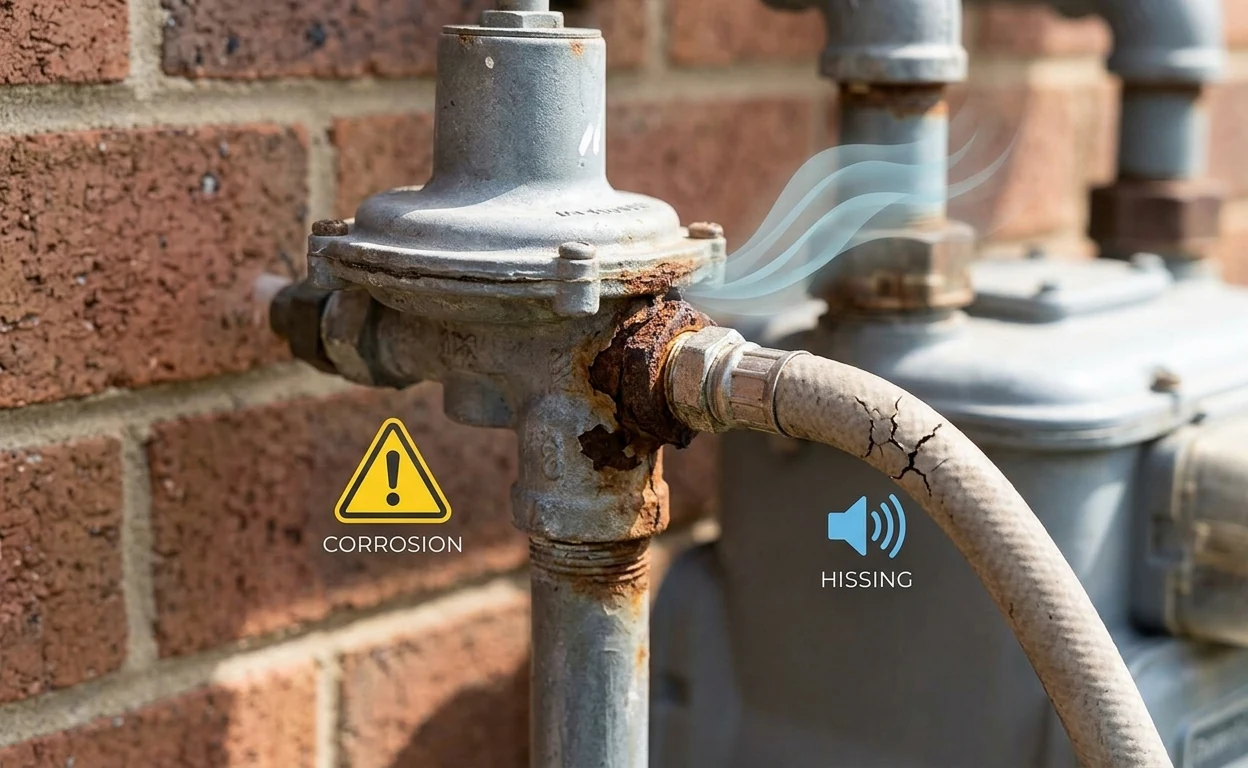
Gas Meters, Regulators and Underground Pipes
The gas meter, regulator and associated valves are important parts of the property’s supply system. Vehicle impact, gardening equipment, building work, tree roots and ground movement can damage pipes or place stress on connections.
Possible warning signs include:
- A persistent gas smell around the meter
- Hissing near the regulator or valves
- Visible impact damage
- Bent, corroded or displaced pipework
- Dying vegetation above an underground line
- Bubbling water or disturbed soil near buried pipes
A gas smell or hissing sound near the meter should be reported to the gas supplier. Do not attempt to repair, adjust or dismantle meter equipment.
Before digging or carrying out excavation work, property owners should confirm the location of underground services to avoid damaging gas pipes or electrical cables.
What to Do Immediately If You Suspect a Gas Leak
A suspected gas leak should be treated as an immediate safety risk. The priority is to prevent ignition, move people to safety and contact the appropriate plumbing emergency support.
Avoid Flames and Electrical Activity
Do not do anything that could create a spark, flame or heat source.
Avoid:
- Smoking
- Lighting matches, candles or lighters
- Turning lights on or off
- Plugging in or unplugging appliances
- Operating exhaust fans or range hoods
- Resetting circuit breakers
- Using power tools
- Starting vehicles close to the suspected leak
- Using a mobile phone inside the affected property
Leave electrical equipment as it is. Use a mobile phone only after moving outside and away from the building.
Turn Off Appliances and the Gas Supply Only When Safe
Queensland guidance advises turning off the affected appliance and gas supply when this can be done safely.
Only attempt this when:
- The controls or isolation valve are immediately accessible
- The gas smell is not overwhelming
- There is no fire or visible damage
- No one is experiencing serious symptoms
- Doing so will not delay evacuation
The main gas isolation valve is usually located beside the gas meter. For many meter arrangements, the handle is turned a quarter turn so it sits across the direction of the pipe. However, valve designs can differ.
Do not attempt to reach the meter if doing so requires entering an area with a strong gas smell, passing damaged equipment or remaining inside longer than necessary.
Ventilate the Area When It Is Safe
Open exterior doors and windows only when they are close by and can be opened quickly without operating electrical devices or delaying evacuation.
Do not move through an area with a strong gas smell to open additional windows. Personal safety is more important than ventilating every room.

Leave the Property
Guide everyone outside, including children, older family members and pets. Move a safe distance from the building, gas meter, LPG cylinders and any area where gas may be escaping.
Do not:
- Search for the source of the leak
- Stop to gather belongings
- Move appliances
- Return for pets or valuables after leaving
- Allow anyone to re-enter the property
Call for Emergency Assistance
Once outside, contact the appropriate service.
Call Triple Zero on 000 immediately when there is:
- A fire or explosion
- An uncontrolled gas leak
- Significant property damage
- A very strong or rapidly worsening gas smell
- Someone who has collapsed or is having difficulty breathing
- An immediate threat to life or property
- A gas smell that remains after the gas supply has been turned off
Queensland Government guidance states that a fire, explosion or uncontrolled gas leak requires immediate evacuation and a call to 000. It also advises calling 000 when gas can still be smelled after the supply has been shut off.
For other suspected leaks, contact the gas supplier’s emergency line and a licensed gasfitter from outside the property. The supplier’s emergency number is normally listed on the gas bill.
Provide clear information about:
- The property address
- Where the smell or sound was noticed
- Whether the gas supply has been turned off
- Any damaged pipes, appliances or meters
- Whether anyone is experiencing symptoms
- Whether there is a fire or another immediate hazard
Do not re-enter the property or turn the gas supply back on until the system has been assessed and declared safe.
What Not to Do Around a Possible Gas Leak
Trying to investigate or repair a suspected leak can make the situation more dangerous.
Do Not Search for the Leak with a Flame
Never use a match, candle, lighter or appliance flame to locate escaping gas. Do not attempt to relight pilot lights or burners while a leak is suspected.
A small ignition source can ignite gas that has accumulated in a room, cupboard, drain or other enclosed space.
Do Not Operate Electrical Devices
Electrical switches and equipment may create a small spark when they are turned on, turned off, connected or disconnected.
Do not operate:
- Light switches
- Power points
- Exhaust fans
- Range hoods
- Vacuum cleaners
- Air conditioners
- Garage door openers
- Smart home devices
- Circuit breakers
Do not attempt to improve ventilation by switching on a fan.
Do Not Attempt DIY Repairs
Do not:
- Tighten gas fittings
- Apply tape or sealant to pipework
- Cap a leaking connection
- Disconnect appliances
- Remove regulators
- Bend or reposition pipes
- Repair cylinder valves
- Turn the gas back on to see whether the smell returns
Gas work in Queensland includes installing, removing, altering, repairing, servicing, testing and certifying a gas system. This work requires the appropriate gas work licence or authorisation.
Do Not Perform a Leak Test During an Emergency
A detergent-and-water solution can be used as part of a controlled visual safety check because bubbles may form at a leaking connection. Queensland Government guidance describes this method for routine gas system checks.
However, do not perform this test when:
- There is a strong gas smell
- Gas can be heard escaping
- Pipework is visibly damaged
- Someone is feeling unwell
- There is a fire or ignition risk
- The leak appears uncontrolled
Leave the area and contact the gas supplier, emergency services or a licensed gasfitter instead.
When to Call a Licensed Gasfitter
Gas systems must be inspected and repaired by someone who holds the appropriate Queensland licence or authorisation. Professional assessment is required for suspected leaks, appliance faults, installations and alterations.
After Any Suspected Gas Leak
Contact a licensed gasfitter when there is:
- A gas smell near an appliance, pipe, cylinder or meter
- Hissing or blowing from a gas connection
- Visible damage to gas pipework
- A positive leak test during a controlled routine check
- A leak that stops after the main supply is turned off
- Concern about a concealed connection
- Repeated or unexplained gas smells
The gasfitter can locate the leak, test the system and complete the necessary repair. The gas supply should not be restored until the system is confirmed safe.
When an Appliance Shows Warning Signs
Arrange an inspection when an appliance has:
- An unstable or sputtering flame
- A flame that has changed from its normal colour or shape
- Soot or scorch marks
- Frequent pilot light failures
- Difficulty igniting
- Unusual noises
- Visible corrosion
- Damaged controls or hoses
- Recurring condensation or fumes
- Symptoms that occur while the appliance is running
These signs may indicate a supply problem, dirty or damaged burners, inadequate ventilation, a blocked flue or incomplete combustion.
For Installations, Disconnections and Alterations
Licensed gas work is required when:
- Installing or replacing a cooktop, oven, heater or hot water system
- Moving an appliance during a renovation
- Extending or rerouting gas pipework
- Installing a new gas point
- Capping an unused gas connection
- Disconnecting or removing an appliance
- Replacing valves, regulators or safety components
- Converting an appliance between natural gas and LPG
- Testing or certifying a gas system
A licensed gasfitter can confirm that the pipe sizing, appliance connections, isolation valves, ventilation and gas pressures are suitable for the installation.
Queensland requires gas system compliance certificates for completed installations, with the documentation issued through the relevant regulatory process.
Unlicensed gas work may breach Queensland requirements, create hidden safety hazards and potentially affect insurance coverage.
How Regular Gas Appliance Checks Can Reduce Risk
Regular inspections can identify deterioration before it causes a leak, appliance failure or combustion problem. Gas hoses, seals, fittings, valves and burners may gradually deteriorate even when the appliance still appears to operate normally.
Professional servicing can also help ensure appliances burn correctly and that flues and ventilation remain safe.
What a Professional Gas Check May Include
Depending on the system and appliance, a licensed gasfitter may:
- Inspect accessible pipes, valves, regulators and connections
- Check flexible hoses for cracking, heat damage or deterioration
- Test connections using approved leak detection methods
- Check gas pressure against appliance requirements
- Examine burner operation and flame stability
- Clean blocked or dirty burners
- Test ignition and flame failure devices
- Check that flues and vents are secure and unobstructed
- Confirm that the appliance has adequate ventilation
- Inspect outdoor equipment for weather damage and corrosion
- Check safe clearances around appliances
- Identify work that does not meet current safety requirements
The gasfitter may also recommend repairs, replacement or further investigation when pipework is concealed or an appliance is approaching the end of its service life.
How Checks Help Prevent Leaks and Unsafe Combustion
Many gas problems begin with gradual deterioration, such as:
- Rubber seals hardening with age
- Flexible hoses cracking
- Metal fittings corroding
- Pipe joints moving slightly
- Burners becoming blocked with grease or debris
- Flues becoming partially obstructed
- Regulators or safety controls wearing out
- Outdoor equipment deteriorating because of weather exposure
Correcting these issues early may prevent a small fault from becoming an emergency.
How Often Should Gas Appliances Be Checked?
There is no single servicing interval that applies to every appliance. Homeowners should follow the manufacturer’s instructions and ask a licensed gasfitter for advice based on:
- Appliance type
- Appliance age
- Frequency of use
- Installation conditions
- Exposure to weather or moisture
- Previous faults or repairs
Gas heaters should be serviced regularly, particularly before periods of heavier winter use. Outdoor heaters, barbecues and other equipment exposed to weather may require more frequent inspection. Queensland guidance recommends regular heater servicing by a licensed service technician, ideally before winter.
Arrange an inspection without delay whenever an appliance changes in operation, develops an unusual smell or sound, produces an unstable flame or repeatedly fails to ignite.
Protecting Your Home from Gas-Related Hazards
Recognising the warning signs of a gas leak and knowing how to respond can significantly reduce the risk to people, pets and property. A rotten egg-like smell, hissing sound, damaged connection or unexplained change around gas equipment should never be ignored. It is equally important to recognise that carbon monoxide is a separate, odourless hazard that may result from faulty combustion, blocked flues or inadequate ventilation.
When a leak is suspected, avoid flames and electrical switches, leave the property and contact the gas supplier, a licensed gasfitter or emergency services as appropriate. Regular inspections, compliant installations and professional appliance servicing can also help identify deterioration before it develops into a serious problem.
For Brisbane homeowners who are concerned about a gas smell, faulty appliance or damaged gas connection, Hop To It Plumbing provides professional inspections, reliable repairs and qualified advice. The team can assess gas and plumbing systems, identify safety concerns and help keep household installations safe, compliant and operating correctly.