A whole house water filter can improve the taste, smell and appearance of water throughout a property, but it is not essential for every Australian home. When considering a system, homeowners can consult a qualified plumber in Brisbane, such as Hop To It Plumbing, to assess the water source, plumbing layout, household demand and ongoing maintenance requirements.
For properties connected to a regulated mains supply, filtration is often installed to reduce chlorine taste, sediment or other aesthetic concerns rather than to make unsafe water safe. Homes relying on rainwater, bore water or another private supply may require different treatment based on appropriate water-quality testing.
Because sediment filters, carbon filters, water softeners, ultraviolet systems and reverse osmosis units perform different functions, the system must be matched to the specific water-quality concern. Understanding these differences can help households avoid unnecessary equipment and determine whether whole house filtration represents a worthwhile investment.
What Does a Whole House Water Filter Do?
A whole house water filter is installed at the point where the main supply enters a property. For this reason, it is also described as a point-of-entry system. When it is positioned before the branches serving the hot water system and household fixtures, it can treat water supplied to bathrooms, the kitchen, laundry and other connected outlets.
The exact coverage depends on the plumbing layout. Outdoor taps, irrigation systems and separate drinking-water lines may be positioned before or after the filter. This should be confirmed during the site assessment rather than assuming every outlet will receive treated water.
Most whole house systems combine two or more treatment stages. A common configuration includes a sediment pre-filter followed by activated carbon. Specialist media or equipment may be added when testing identifies hardness, iron, manganese, microorganisms or another specific concern.
Importantly, the term “whole house filter” does not describe one standard level of treatment. Performance depends on the media, flow rate, cartridge capacity, contact time and contaminants the product has been tested to reduce.
What Types of Whole House Water Treatment Are Available?
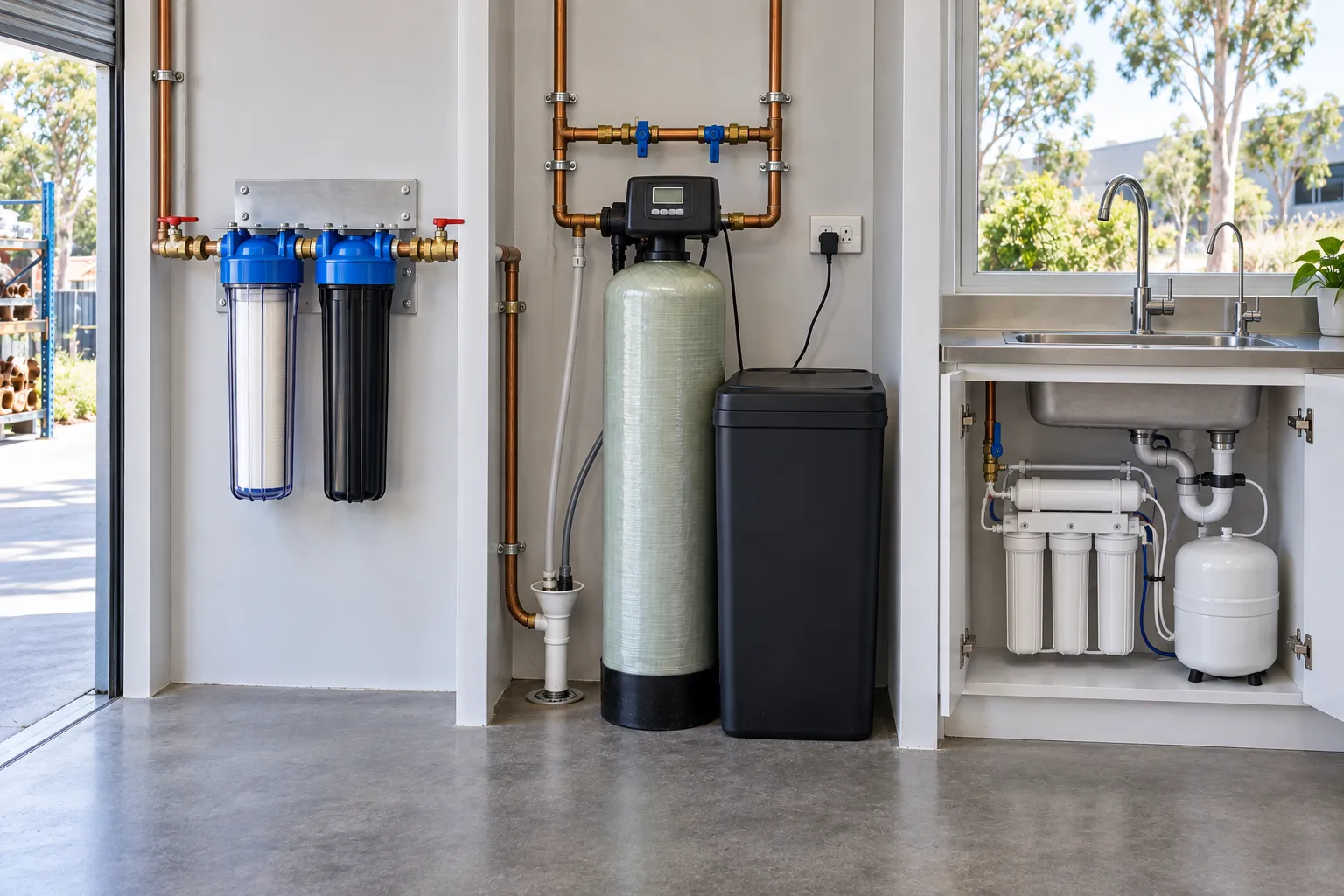
Different technologies address different water quality problems. Some households need only one or two stages, while private water supplies may require a more comprehensive treatment process.
Sediment Filters
Sediment cartridges physically capture particles such as sand, silt, rust flakes and other suspended material. They can improve water clarity and help prevent grit from reaching tap aerators, valves and appliances.
These filters do not normally remove dissolved chemicals, hardness minerals or microorganisms. They are often used as the first stage in a system because reducing sediment can help protect the treatment equipment that follows.
Activated Carbon Filters
Activated carbon is commonly used to reduce chlorine, unwanted tastes and odours. Depending on the product and its certification, it may also reduce certain organic compounds and treatment by-products.
Standard activated carbon should not be assumed to remove chloramine, PFAS, lead, pesticides or every other chemical. Catalytic carbon or another specialised treatment may be required for some contaminants. Product claims should be checked against independent test results for the exact substance of concern.
Water Softeners and Scale-Reduction Systems
Hard water contains dissolved calcium and magnesium. These minerals can contribute to scale on showerheads, heating elements and other surfaces, but they pass through many ordinary sediment and carbon filters.
An ion-exchange water softener is designed to remove hardness minerals and usually requires salt replenishment. Other scale-reduction systems may change how minerals behave without removing them. A household concerned about scale should therefore look for equipment specifically designed for hardness rather than relying on a general-purpose filter.
Ultraviolet Disinfection
Ultraviolet treatment uses light to inactivate susceptible microorganisms. It can be useful for some rainwater, bore water and private supplies when it forms part of a properly designed treatment system.
UV equipment does not remove sediment, dissolved chemicals or hardness. The water must also be clear enough for the light to work effectively, so pre-filtration is usually required. The lamp and quartz sleeve need regular attention according to the manufacturer’s instructions.
Reverse Osmosis
Reverse osmosis forces water through a membrane and can reduce a broad range of dissolved substances. However, whole house reverse osmosis is less common than an under-sink drinking-water unit because it can be expensive, may reduce flow and produces a reject-water stream.
For many households, treating drinking and cooking water at one kitchen outlet is more practical than processing all water used for showers, toilets and outdoor purposes. Reverse osmosis should be selected only after considering the target contaminants, water pressure, wastewater and maintenance requirements.
What Are the Potential Benefits?
The benefits of a whole house system depend on the incoming water and the treatment selected. A properly matched system may improve several aspects of household water use.
Improved Taste, Smell and Appearance
Carbon filtration can reduce chlorine-related taste and odour, while sediment filtration can remove visible particles. Treating the water at the entry point provides a consistent result across the outlets connected after the system rather than at one kitchen tap alone.
This can be useful when unwanted tastes, smells or particles are noticeable in several parts of the property. However, water that suddenly changes in colour, smell or taste should first be reported to the water supplier. A filter should not be used to conceal an unexplained water-quality problem.
Less Sediment Reaching Fixtures and Appliances
Removing grit before it circulates through the property can help keep aerators, valves and small water passages clearer. It may also reduce sediment collecting in toilet cisterns or entering dishwashers, washing machines and hot water systems.
The practical benefit will be greatest where sediment is genuinely present. Filtration cannot correct corroded internal pipes, damaged fixtures or other plumbing faults that continue to introduce material downstream of the filter.
Better Control Over Scale When the Correct Treatment Is Used
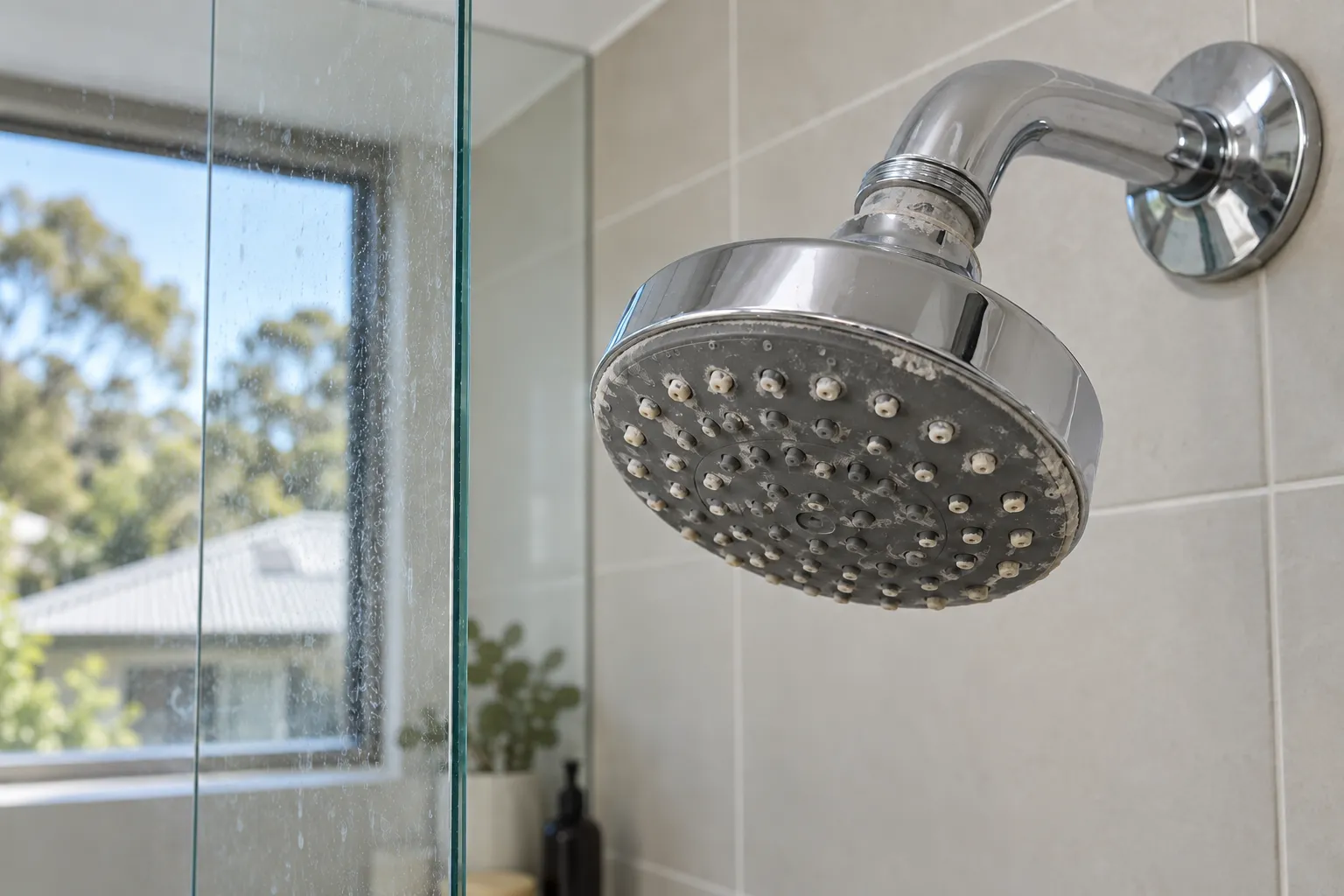
Where testing confirms hard water, a suitable softener or scale-control system may reduce mineral deposits on tapware, shower screens and heating components. Households experiencing scale should understand the signs of hard water damage before choosing a filter, softener or scale-reduction system. This can make cleaning easier and may help water-using equipment operate as intended.
These benefits should be attributed to the softening or scale-control stage, not to whole house filtration generally. Ordinary sediment and carbon cartridges do not automatically solve hardness.
Convenient Treatment Across Multiple Outlets
A point-of-entry system can be more convenient than maintaining separate shower, fridge and tap filters. It may suit a household that wants to address the same confirmed issue across bathrooms, the kitchen and laundry.
If the concern relates only to drinking-water taste or one contaminant consumed at the kitchen tap, an under-sink filter may provide a more targeted and economical solution.
What Are the Limitations?
No single system removes every possible contaminant. A filter that performs well for sediment or chlorine may have little effect on dissolved minerals, microorganisms or a particular chemical. Broad descriptions such as “pure water” or “removes toxins” should not replace evidence showing what the product has been tested to reduce.
Whole house filtration can also affect pressure and flow. The equipment must be sized for the property’s peak demand so that showers, taps and appliances can operate at the same time without an unacceptable pressure drop. Cartridges that are undersized or overdue for replacement may restrict the supply further.
Removing chlorine also removes part of the disinfectant residual used to control microbial growth in mains water. The HealthyWA guidance on household water filters notes that poorly maintained filters can allow bacteria to multiply. Correct installation, regular cartridge changes and protection from heat and sunlight are therefore important.
A point-of-entry filter may not address contaminants introduced by plumbing after the filter. For example, some metals can leach from internal pipes or fittings. If lead or another plumbing-related contaminant is suspected at a drinking outlet, professional investigation and point-of-use treatment may be more appropriate.
Does Australian Mains Water Need Filtering?
Drinking water supplied by Australian water utilities is managed under state and territory frameworks and against the Australian Drinking Water Guidelines. Water that complies with those guidelines is considered safe to drink.
Chlorine or chloramine may be used to disinfect the supply and limit microbial growth as water travels through the network. Some householders dislike the resulting taste or smell, but that does not necessarily indicate that the water is unsafe. In a compliant mains supply, filtration is commonly a preference-based improvement rather than an essential health measure.
Before arranging independent testing, householders can check the latest water-quality report published by their local supplier. If the water has changed suddenly, the supplier should be contacted before purchasing treatment equipment.
Private supplies require a different approach. Rainwater, bore water and water drawn from other private sources can be affected by microorganisms, chemicals, animals, land use and maintenance conditions. Where safety is uncertain, testing should be arranged through a suitably accredited laboratory and interpreted with advice from the relevant health authority or water-treatment professional. NSW Health, for example, recommends using a NATA-accredited laboratory for private water testing.
How Much Does a Whole House Water Filter Cost?
The total cost varies considerably according to the number of treatment stages, the required flow rate, site access and the condition of the existing plumbing. A basic sediment housing and cartridge can cost substantially less than a high-capacity carbon system, water softener, UV unit or whole house reverse osmosis system.
An accurate budget should account for:
- Equipment and installation
- Plumbing alterations, isolation valves and a bypass
- Replacement cartridges, lamps, salt or media
- Water and electricity used by applicable treatment equipment
- Periodic servicing and eventual component replacement
Installed multi-stage systems can run into several thousand dollars, particularly where specialist treatment or major plumbing changes are required. Because inclusions vary, households should obtain an itemised quote rather than compare equipment prices alone.
Claims that a system will pay for itself through fewer repairs should also be treated cautiously. Filtration may help protect equipment from a confirmed sediment or hardness problem, but the financial return depends on local water conditions, household consumption and maintenance costs.
What Maintenance Is Required?
Maintenance intervals should be based on the manufacturer’s instructions, rated capacity and actual water conditions. A fixed replacement schedule is not suitable for every household.
Sediment cartridges may need attention sooner where the incoming supply carries visible particles. Carbon cartridges are commonly replaced according to time or litre capacity, even if the water still appears clear. UV lamps and quartz sleeves require scheduled maintenance, while softeners need salt and periodic servicing.
Signs that a system needs attention can include lower pressure, the return of an unwanted taste or smell, visible cartridge discolouration, leaks or warning indicators on powered equipment. Filters should not be left in service beyond their rated capacity because performance can decline and neglected media can become unhygienic.
The system should be installed in an accessible position and protected from weather, excessive heat and physical damage. A bypass arrangement can allow the household supply to continue while cartridges or equipment are serviced.
How Should a Household Choose a System?
The selection process should begin with the problem, not the product. A practical assessment involves five steps:
- Confirm whether the property uses mains water, rainwater, bore water or a combination of sources.
- Review the supplier’s water-quality report or arrange appropriate testing when there is a reason to do so.
- Identify the exact objective, such as reducing sediment, improving chlorine taste, controlling hardness or treating a private supply.
- Choose equipment independently tested for that purpose and sized for the household’s peak flow rate.
- Compare installation requirements, ongoing maintenance and total ownership costs with a point-of-use alternative.
Products used in plumbing installations should carry any required WaterMark certification. Fixed plumbing work should be completed by an appropriately licensed plumber in accordance with the requirements of the relevant state or territory.
For a health-related concern, advice should come from the local water supplier, health authority or an appropriately qualified professional rather than relying solely on a sales demonstration. Testing should also identify contaminants before treatment is recommended. A result showing one issue does not justify equipment intended for a different problem.
Making the Right Choice for the Property
A whole house water filter can be a worthwhile investment when a confirmed water-quality issue affects several outlets or when a household wants more consistent taste, odour and sediment control. However, homes with a compliant mains supply and concerns limited to drinking water may receive better value from a targeted under-sink system.
Before selecting any equipment, householders should identify the issue, review available water-quality information and compare the system’s capabilities, maintenance requirements and long-term costs. Hop To It Plumbing can assess the property’s water supply and plumbing layout, explain the available options and install a system suited to the household’s actual needs.