
A few tiny flies besides your shower can be easy to dismiss. If they keep returning, though, you might start wondering if something is wrong beneath the bathroom floor. Their presence deserves attention, but it does not automatically mean your drain is blocked or a pipe is leaking. For Brisbane households, Hop To It Plumbing can investigate plumbing concerns when recurring insects appear alongside drainage problems or unexplained moisture.
The first step is identifying where the insects gather and looking for other signs around the bathroom. Their appearance, the condition of nearby surfaces and how your fixtures drain can all provide useful clues. Knowing what to look for helps determine whether ordinary cleaning is a sensible starting point, a licensed plumber should investigate, or pest identification would be more appropriate.
How Do I Know Whether the Flies Are Coming From My Drain?
Flies resting besides a drain are a clue, not confirmation that they are breeding inside it. Small insects can gather around moisture, light or sheltered surfaces, so the place they are noticed may not be their actual source.
Some common drain flies, also called moth flies, are small insects with fuzzy bodies and broad, moth-like wings. They are often found resting on bathroom walls near damp areas or drainage openings. However, other small flying insects can look similar, so appearance alone cannot confirm their identity or breeding location.
Before arranging an assessment, observe the bathroom during normal use. Look for consistent patterns without opening pipework, removing fixed fittings or disturbing concealed areas.
Where the Insects Gather and When They Appear
Notice whether the activity centres on one fixture or spreads throughout the room. A few insects repeatedly appearing around the shower grate suggest a different starting point for investigation from insects scattered near the window, basin and doorway. Neither pattern identifies the cause by itself, but both are useful details to pass on.
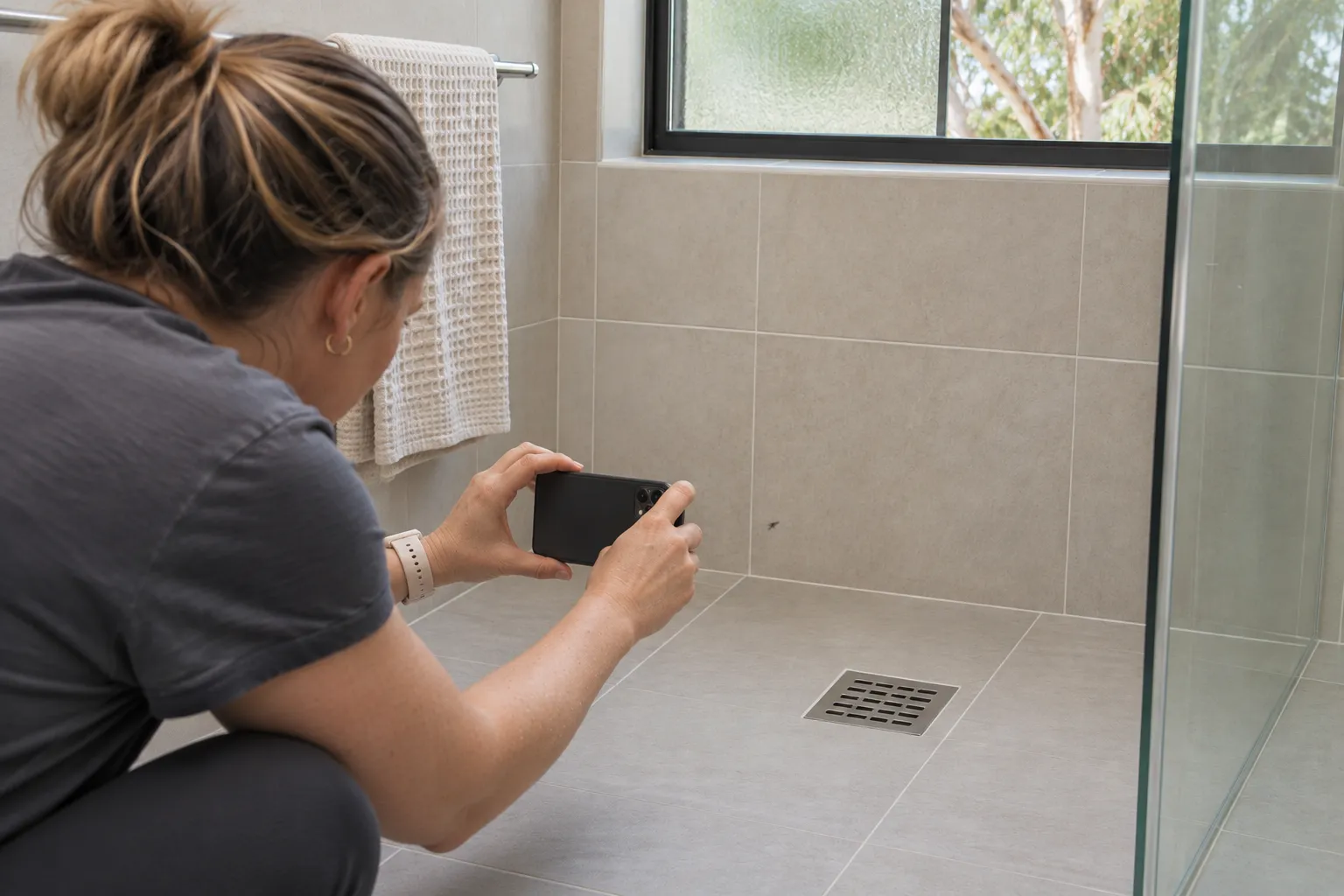
Timing matters too. Do small flies appear near shower drain openings only after the bathroom has been used, or are they present before anyone showers? Does the activity continue when the room has been unused for a day? These observations help distinguish a recurring issue from occasional insects entering the room.
A photograph can help document what you are seeing. If possible, capture an insect at rest and a wider view showing where it was found. Appearance alone cannot reliably establish the species or breeding source, particularly when insects are very small. Calling them drain flies is a description of your suspicion, not a confirmed diagnosis.
Other Damp Places That Can Attract Small Flies
Look beyond the drain opening at exposed bathroom surfaces. A wet bathmat, damp cleaning cloth or moisture collecting around a bin can provide alternative places for insects to gather. Water lingering at the edge of a shower screen may also explain why insects appear nearby without proving that the waste pipe is involved.
Pay attention if these areas dry between uses. A bathroom that remains humid can have several damp spots at once, making the nearest drain an easy but potentially misleading suspect. Humid conditions can make drying slower at times, although this problem is not unique to the city.
Keep observations separate from interpretations. For example, noting five small flies on the shower wall each morning is more useful than assuming the shower pipe is infested. Likewise, record visible moisture without deciding where it originated. If insects also appear away from plumbing fixtures, mention this when seeking advice. It may change whether a plumbing assessment or pest identification is the more useful first step.
Damp Build-Up Is Not the Same as a Blocked Pipe
A drain can carry water away while still having damp organic material on surfaces near its opening. This distinction matters because an insect problem and a drainage obstruction may require different responses.
Bathroom drain build-up can contribute to recurring insect activity, but the presence of flies alone does not establish that a pipe needs clearing. How the fixture performs during ordinary use provides a separate set of clues.
Organic Film Can Support Insects Even When Water Drains
Soap residue, skin particles and other organic material can collect on damp surfaces around bathroom waste openings. Eventually, this material may form a film that provides suitable conditions for some small flies to breed. The amount needed to support insect activity does not necessarily prevent water from passing through.
This means a shower can appear to drain normally while insects continue returning to the surrounding area. Conversely, a blocked pipe can exist without any visible insect activity. Treating these as separate observations helps avoid jumping straight from flies besides the drain to the assumption of a major blockage.
There is also a difference between residue on an exposed surface and material deeper inside the drainage system. Looking at a dirty grate does not reveal the condition of the pipe beneath it. Equally, a clean-looking opening does not rule out a concealed drainage issue.
Slow Drainage and Persistent Dampness Need Separate Attention
Notice whether water takes longer than usual to leave the shower or basin during normal use. New pooling, recurring gurgling or unpleasant drain odours are relevant details for a licensed plumber, particularly if more than one fixture is affected. None of these observations, on their own, identifies the exact location or cause of a fault.
Moisture also needs context. Water remaining on the shower floor immediately after use is different from an area that stays wet despite the bathroom being unused. Persistent dampness besides a fixture, swelling around cabinetry, water stains on nearby walls or ceilings and musty smells that remain despite ventilation can indicate a moisture problem requiring further investigation.
Staining or deterioration outside the usual splash area deserves particular attention. These signs may be associated with leaking plumbing, failed seals or other sources of water ingress rather than ordinary bathroom humidity.
If drainage changes extend beyond one bathroom fixture, understanding whether a blocked drain could involve the sewer can help you describe the broader symptoms when booking a plumber.
What Can I Safely Do Before Calling a Plumber?
Your role is limited to ordinary housekeeping and observation, not opening or treating the drainage system. Cleaning exposed surfaces and helping the room dry can make it easier to see if the activity is linked to accessible moisture or residue. The QBCC identifies drain unblocking and pipe repairs as plumbing and drainage work requiring a licensed professional.
These steps may improve conditions around the bathroom, but they cannot confirm that concealed plumbing is sound. Persistent dampness or changing drainage still needs separate attention, even if fewer insects are visible.
Clean Accessible Surfaces and Reduce Lingering Moisture
Clean exposed bathroom surfaces according to the fixture and cleaning product care instructions. Focus on areas you can reach without removing fixed components, including the shower floor, the visible surface of the grate and surrounding tiles. The aim is ordinary removal of surface residue, not an attempt to clear the pipe.
Avoid dismantling traps, lifting fixed drain assemblies or reaching into pipework. Do not pour drain chemicals or improvised treatments into the opening to deal with the insects. These actions can introduce risks without establishing where the insects are coming from or why moisture remains.
Address ordinary sources of lingering moisture at the same time. Allow bathmats and cleaning cloths to dry, keep the bathroom bin clean and use the room's existing ventilation as intended. If you normally use an exhaust fan, notice whether the bathroom still stays unusually damp afterwards. Do not open or attempt to repair the fan yourself.
Queensland Government guidance on keeping wet areas dry and well aired provides practical advice on reducing moisture in bathrooms.
Notice Whether the Insects Return After Surface Cleaning
After cleaning, keep track of whether activity reduces, stays the same or returns to the same location. There is no universal number of days that proves the problem has been resolved. Insects may remain visible for a while, and a temporary reduction does not establish that the original source has disappeared.
A simple dated note is enough: where the insects appeared, whether the surfaces were dry and whether drainage seemed normal. Avoid changing several cleaning products or trying different drain treatments, as this makes the pattern harder to interpret and may create unnecessary exposure to chemicals.
Removing visible insects alone may leave the conditions attracting or supporting them unchanged. If flies repeatedly return despite clean, dry exposed surfaces, the next useful step is to clarify the source rather than intensify cleaning.
Recurring Insects Can Warrant a Plumbing Investigation
Recurring insects justify a closer look when they appear alongside slow drainage, leakage or persistent unexplained dampness. The purpose of a plumbing assessment is to investigate those symptoms, not to assume every small fly indicates a defective pipe.
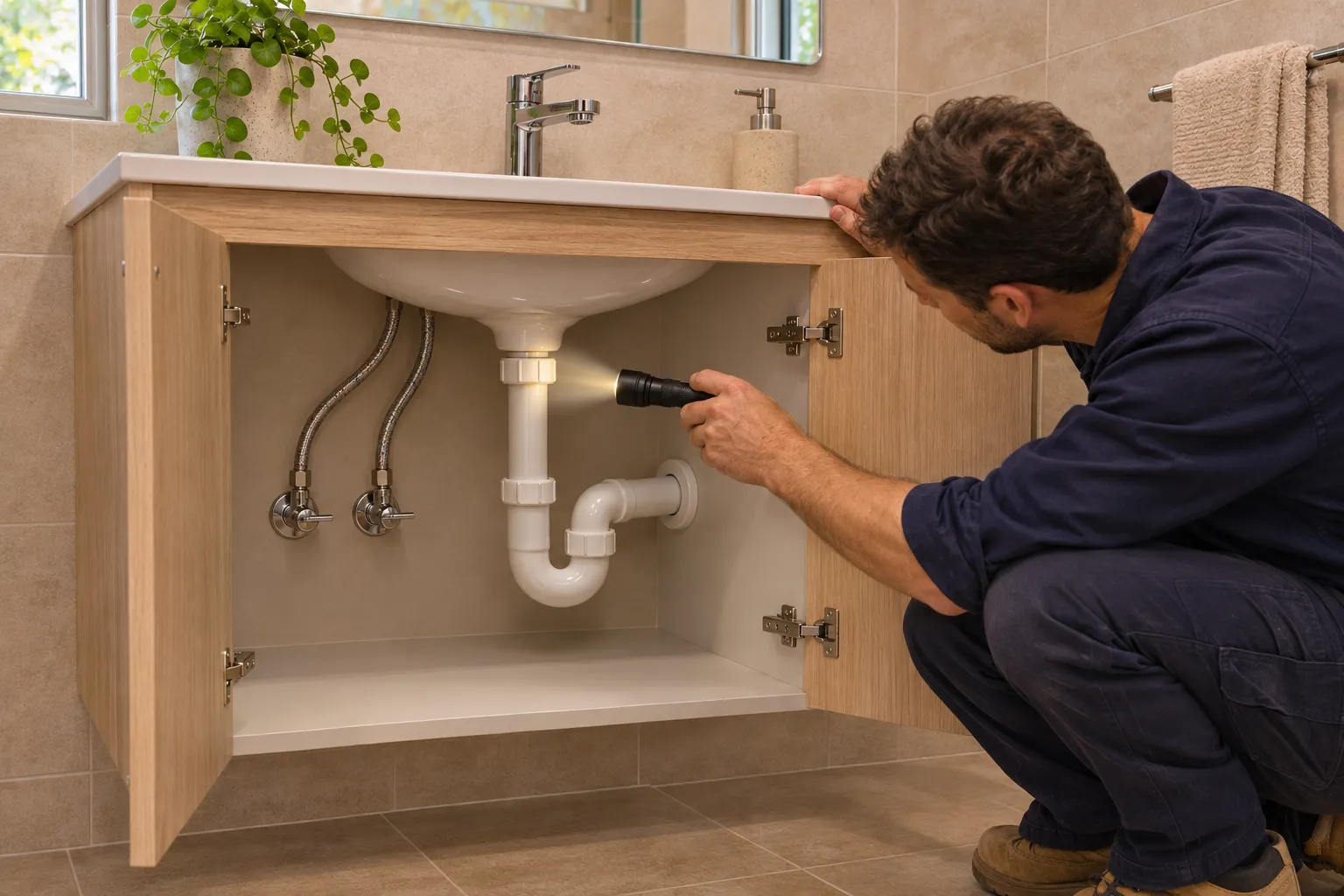
A plumber can inspect accessible plumbing connections, check how affected fixtures drain and look for visible signs of leakage or moisture damage. If the initial findings suggest a concealed problem, further investigation may be recommended. The approach depends on the symptoms and what can be established during the assessment.
If the bathroom drains normally and there is no unexplained moisture, identifying the insect may be the more useful first step. Choosing the right type of professional can reduce unnecessary work and help establish a clearer explanation.
When Drainage Changes or Concealed Moisture Accompany the Flies
Arrange a plumber if you notice recurring pooling, a fixture draining more slowly than before or visible leakage around plumbing connections. Dampness that persists outside normal splash areas also deserves attention, especially if it returns after exposed surfaces have dried.
You do not need to prove there is a hidden leak before calling. Describe what you can observe and leave the diagnosis to the professional. Avoid opening walls, removing fixtures or disturbing flooring to look for a source yourself.
When booking, explain which fixture is involved, how long the insects have been appearing and whether water flow or drainage has changed. Mention any unpleasant odours, visible staining, swollen cabinetry or signs of moisture affecting other fixtures. Photographs and a short record of recurrence can help the plumber understand the problem before attending.
If you have started searching for blocked drains in Brisbane because flies are appearing alongside slow drainage, experts is a local contact for assessing the plumbing concerns. Explain that recurring insects prompted the enquiry so the discussion covers the drainage symptoms and any unexplained moisture.
Choosing Plumbing Assessment or Pest Identification
If water drains normally, exposed surfaces dry and there are no signs of leakage, a pest professional may be better placed to identify the insects and investigate their likely source. Identification matters because not every tiny fly seen in a bathroom has the same habits or originates in a drain.
Where plumbing symptoms are present, ask plumbers what their initial assessment involves and what findings would justify further investigation. Do not assume that drain clearing is automatically required. If clearing is proposed, know what evidence supports it and what is included in the quoted scope. This explanation of factors affecting drain-clearing costs can help you prepare those questions without relying on a generic price estimate.
Keep the roles distinct when comparing suppliers. An assessment addresses drainage and moisture concerns, while pest identification addresses what the insects are and where they may be breeding. Depending on the findings, you may need one type of help or both, rather than a single treatment aimed only at the flies you can see.
Keeping Your Bathroom Fly Problem From Returning
The most useful approach is to identify the source before arranging unnecessary treatments. If the insects appear alongside slow drainage, persistent dampness or signs of leakage, Hop To It Plumbing assesses the plumbing concerns and determines whether further investigation or drain clearing is warranted. Addressing the underlying issue, rather than simply removing the visible insects, is the better way to work towards a lasting solution.